
America is so huge that it can often feel like many different countries packed into one. It’s easy to forget just how vast it is, and in that memory hole we sometimes lose states entirely. Montana is one that, unless you’re from there or the middle of the country, often goes overlooked. As a state itself, it’s massive — the fourth-largest state, it dwarfs plenty of countries in size. Conversely, its population is tiny compared to other states. With a sprawling landscape and people few and far between, its history and stories get lost in the mountains and farmland.
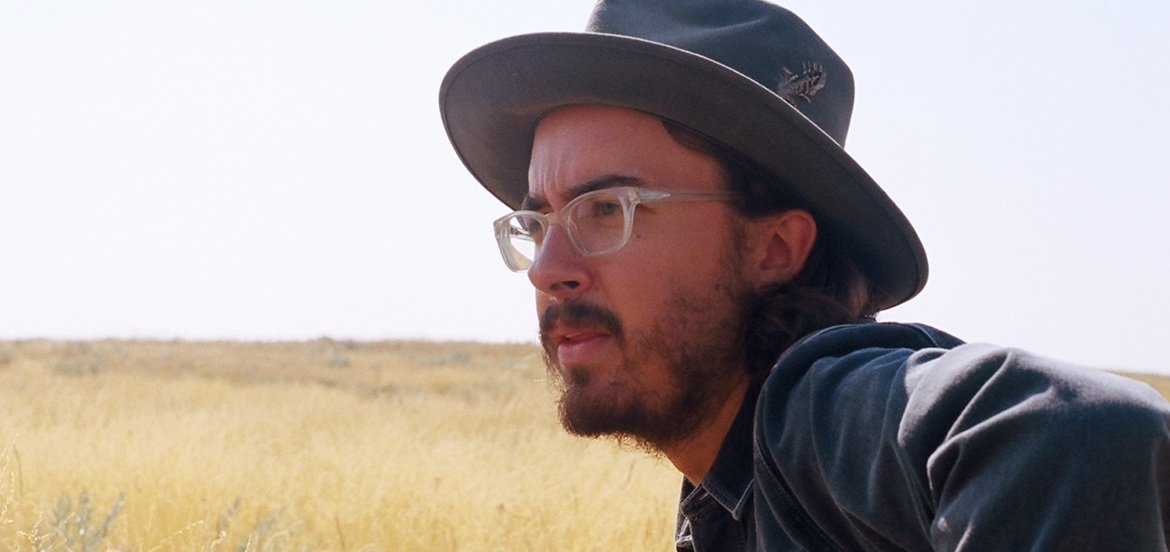
Seeking to change that and preserve some of that history, director Wyatt Maw’s Ashland is a portrait of a mysterious people and place. Shot on gorgeous 16mm over eight years, the doc weaves in and out of the lives of people living in the titular Ashland, Montana. An older woman living on the fringes of Mennonite society, a young would-be rodeo star dreaming of greatness, a daughter with eleven siblings doing her best to make ends meet, and members of the Cherokee and Crow tribes are just some of the subjects that Maw follows.
Where other documentaries fall victim to their director’s exploitative gaze, either too fawning or too pitying, Ashland benefits from Maw’s enmeshment with this community. Having worked on a ranch in Ashland before ever starting the film, he gained the community’s trust while learning what it meant to be a citizen. This gives the film authenticity, not only of place but of feeling. Your mind never wanders to the “triumph of the human spirit” or to feeling sorry for anyone. Maw’s subjects are just people living their lives. His intention is to preserve a history that was being written long before cameras ever showed up to shoot them and will continue long after they’ve wrapped.
After its world premiere at DOC NYC, I sat down with Maw to discuss Ashland, how it captures history, and what screening in New York City meant in its journey.
Brandon Streussnig: Shooting on 16mm over eight years is obviously a conscious choice. I’m sure you’re always factoring in economics and practicality, but aesthetically it really lends itself to the story you’re telling here: the people who inhabit these spaces and how timeless they feel.
Wyatt Maw: Yeah, absolutely. I mean, there’s a number of reasons we shot on 16. It sort of speaks to what you were just getting at there. Time moves differently there, and when I first went there, I was trying to put my finger on why. I just always saw that world on film, on something kind of tactile that you could actually feel and manipulate with your hands.
The decision to shoot on film was there from the beginning. I think also the way that film just renders textures: texture of the land, the texture on the people, the faces, hands, all that kind of stuff becomes more enhanced on film in a way. I think it’s a world where so much of people’s lives is constructed through handmade objects and houses. It’s like everything in these people’s lives, in their world, feels like it’s made from something else.
I feel like the film mirrors that in some way. Like you were saying, I think it helps drive home this idea of a place that’s hard to define in terms of its time. Where it’s like you’re not quite sure if what you’re seeing is maybe in the past or the present or the future or something.
BS: How did that affect the actual process of shooting? There are some pretty tight-knit moments on horseback and some perilous bull-riding scenes. I imagine getting a 16mm camera into some of those spaces was challenging.
WM: Yeah, our approach was always to get as close as we could to people and the animals. I wanted the film to feel intimate, as if we were right there with the people, experiencing their world through their eyes. So it’s like we just had to buck up and just buckle up and just run in there and do this stuff.
Their horses are so well-trained that I never really felt like we were in any kind of precarious situation or any danger. None of the horses seemed at all perplexed, confused, or alarmed by our camera, luckily. We were very fortunate to be able to just get right up in there and film really close, which is what we wanted to do. I never wanted to keep the camera back at a distance, on sticks, locked off with a zoom lens or whatever. It was always just, let’s get right up in there as close as we can.
BS: How did you find some of the subjects for the film? What was the process of getting their trust like?
WM: It was a really long process of finding people, and it was a natural extension of being really curious about this community and the people who lived there, and trying to get to know them first before I introduced a camera into their lives. That’s just the way I approach working: I want to relate to people as people, not really as subjects for a film.
With everybody, I introduced myself as a filmmaker and said we were making this film, but for a long time, it was more about being welcomed into their lives and spending time with them. I first came to Ashland to work on a ranch. I worked the ranch, drove tractors, rode horses, and stayed involved with the community. Doing that opened up a lot of doors for me. I think people trusted me because I wasn’t just observing them, but was actually involved in their lives in some way. So all of that was really helpful.
In terms of choosing people for the film, why did I choose certain people? I think that’s harder to define. I’m attracted to people that have a presence on camera. I shot a lot of stills before rolling any footage on this film. I shot a lot of black-and-white and 35mm. Through that process, I could tell who had a face that worked for cinema. I feel like faces are so important to how we engage with cinema. If somebody had a face that, to me, recalled an older time, or maybe something of an old Americana or something like that, then I was attracted to them in terms of being featured in the film in some way.
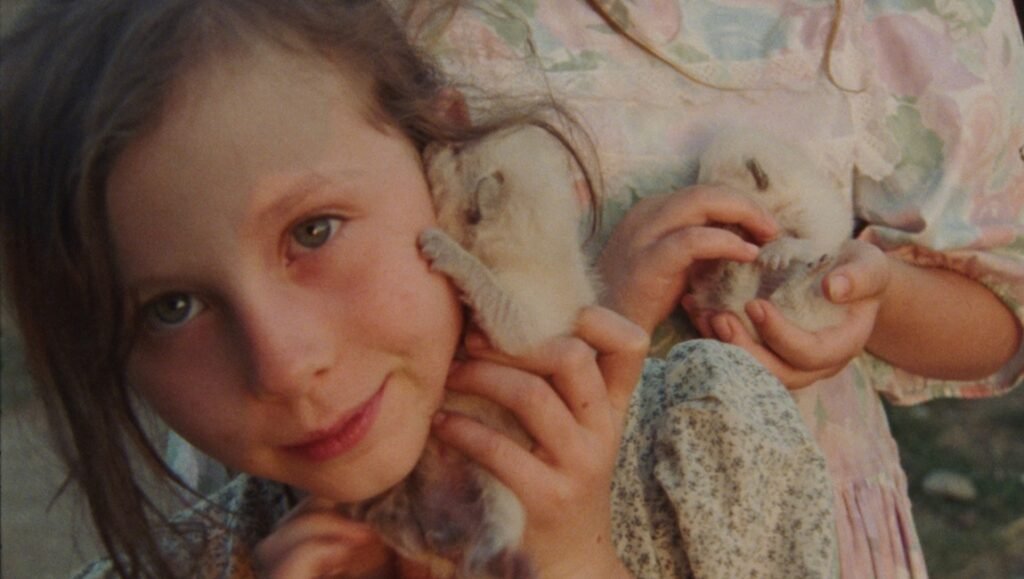 BS: You ride a delicate balance of not glamorizing their lives in a way that feels leering, but it also never comes across as poverty porn or exploitative in the other direction. How do you walk that line as a documentarian?
WM: My approach is that I genuinely love these people. A lot of the people are like family to me. I’m still in contact with them. Mary, the widow in the film, I worked on her and her husband’s ranch. That was the ranch that I worked on for that summer. So a lot of people in the film, I have a sort of intimate connection with.
I guess it was natural for me to depict them with a kind of soft grace. I was always afraid of objectifying anybody or using anybody to push forward an idea or theme I had, or something like that. I wanted the film to show them the way I see them. I see them all as beautiful people who are all struggling with stuff, but who just have an incredible connection to this place and to their families and to God and to spirituality and their community.
BS: Eight years is a long time to make a film. I know you worked with three different editors on the film. Tell me about the process of compiling all of that footage and making something cohesive out of it.
WM: Yeah, it was really hard. The editing was tremendously difficult because the film doesn’t really have a story or a defined structure. My editors were amazing. I mean, I didn’t work with all three at the same time. They were kind of layered over time. So my first editor, James Carson, and I were able to set a foundation for the film in terms of providing a kind of structure for it and a sense of the rhythm and tone and things like that. Then I think we were able to enrich the film, and over time the edit focused more on the people and their struggles, and on defining who they are within the film. It was a long journey to get to the final cut. I think we were editing for three years. It took a while.
BS: The sound design also goes a long way in shaping the narrative when dialogue can’t. You’re working with Martín Hernández here, who is one of the greats in sound design. What was that process like?
WM: I’m so glad you mentioned that because it was really important to the film. I think that Martín’s work is just incredible. He’s a genius. We did our mix in Mexico, and when I first heard what Martín had crafted, it blew me away because it adds a whole other meaning to the movie. He made the land become more of a character. Ashland, the place, was always there, and it’s there in the edit, but the sound kind of gives it a voice, almost. That was all Martín.
When I first heard what he had done, I was just sort of blown away. I mean, there are moments in the film that he totally elevated, and they’ve become something else entirely. We didn’t have much discussion about it beforehand. He understood the film. He came to Montana to do field recordings. He got to know some of the communities there in Ashland, the Amish, and the Cheyenne and Crow. He just went off and did his thing, and it was incredible.
BS: It’s interesting because cinema, in some ways, is an extension of oral storytelling. So much of the film is about just that. I love the moment when the Indigenous man shows the rocks with stories drawn on them and calls it “Motion Picture Rock.” Tell me about incorporating those traditions with your chosen means of telling stories.
WM: It’s funny you mention the rocks. That is one of the things I find interesting, because it is a form of cinema long before cinema existed. I definitely wanted people to explain their heritage, their traditions, what it means to come from these different cultures, and so on. I thought that was really important, especially to hear from kids’ point of view. I wanted to know what they thought of these things. But it’s not a film where I want everything to be explained. So I hope that feeling of people, how they relate to their ancestors and so on, is something that you see in them as much as you hear from them. I wanted you to feel that as you watch.
BS: Is that why you have a few surreal flourishes, like the burning piano peppered in?
WM: I like the idea of trying to visualize what some of the people are feeling. I felt like there was an opportunity in the film to symbolically convey what some of the characters are going through, like that, with the piano being an example of that where we weren’t there at the time that the house burned, that Becca lost the family home. We filmed after that happened. But I felt like that moment needed some kind of visual kind of indicator of what she was feeling inside.
In that example, Becca and her family are very stoic, and they rely on their faith and religion to get through tough moments like that. So for her, it was difficult in a way for her to talk about that tragedy because they’re just tough, resilient people, and they don’t really dwell on things like that so much. I felt like that was sort of a moment where I was just wanting to visualize maybe something that she’s experiencing internally.
BS: After almost a decade of working on this, is there a relief to have it out in the world?
WM: Yeah, I’m still processing it. It just kind of feels surreal. We’re so excited to have premiered the film at DOC NYC. It’s an amazing festival. There’s something that feels fitting about bringing the film to New York. I don’t quite know if I can explain what that is. But I think it’s just maybe interesting to bring a film from the heartland of America, a place that’s sort of overlooked or forgotten or something, and bring it to the capital of the country, basically.
BS: Showing it to the coastal elites, as it were.
WM: Yeah, exactly. [laughs] Yeah. But we had an amazing response, and it was an incredible screening. It felt like I was floating or something. It’s hard to put it into words.
Comments are closed.