
The Old Man and His Car
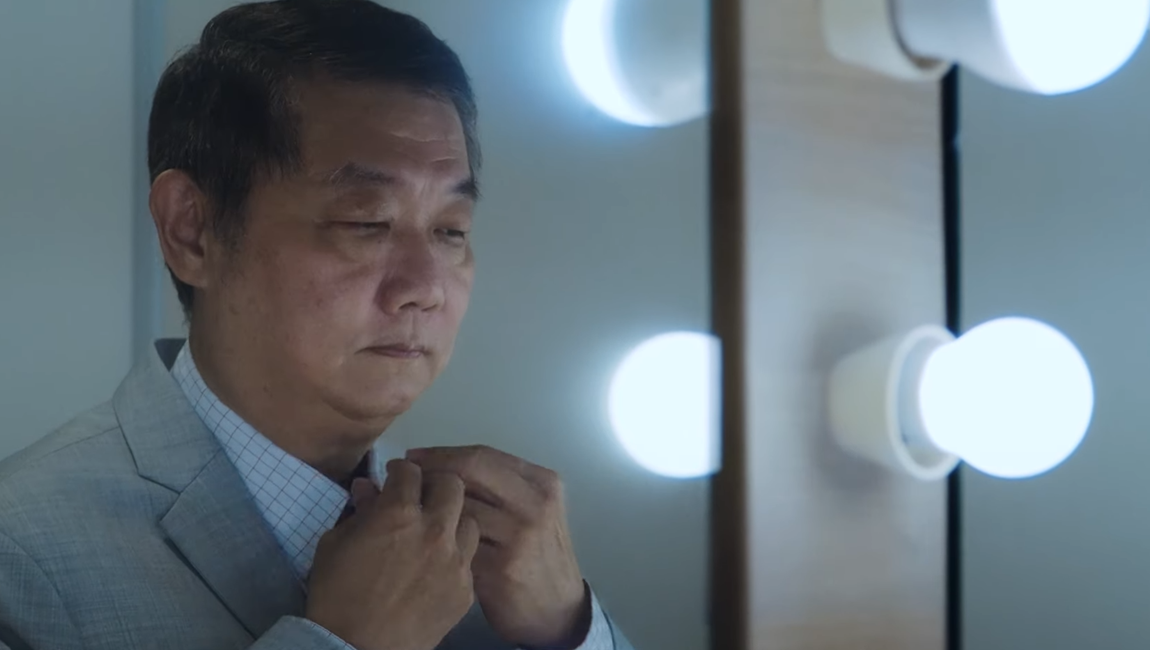
There is a good deal of sentimental value, both real and inflated, in Michael Kam’s The Old Man and His Car, most glaringly clued in by its titular reference to Hemingway. Sentiment and simplicity are a kindred pair, Kam seems to say, as his protagonists lumber and stagnate across the lightly tinged streetscapes of the unceasingly nostalgic Singapore. The old man, Hock (Lim Kay Tong), wears a tired, wearily ironic countenance, fraught with sadness and no little disdain. His car, a sedan of the Mercedes-Benz stock, moves along more reliably than its owner, its coat of champagne paint sleekly plastered over a hunk of metal and age. Both are weathered from memories: infused with painful, autobiographical immediacy, Kam’s debut feature offers a sincere meditation on the possible inner life of an older generation beset by the unnerving, unmoved tides of change.
It’s certainly an unabashedly melodramatic feature, although Kam quietly instills in his mise-en-scène the moving furnishings of grace. Widowed by an ailing wife and left alone in his one-room apartment, Hock is a shell of a former, equally reticent self — a coach and teacher in a long-demolished primary school — who nonetheless persists in holding on. As he prepares to sell the car and home, bound for his son’s abode in Canada, things go south. The car won’t be sold; a gay and vivacious prospective buyer, Junie (played by transgender actress Kristin Tiara), has latched herself onto it, but Hock resists, motivated less by any conservative worldview than he is by a withering yet dogged ego. His bespectacled, wiry frame tells us all we need to know: this English-educated family man, forged in the reliable crucible of nation-building, now clings onto an empty ideal, a dream that never arrived. Though songs in dreamy Hokkien percolate from the old radio, the film’s imago of modern Singapore is an unsettled walking contradiction, some time between the fake Nokia ringtones overlaid onto Hock’s smartphone and the sepia accentuations of the sleek urban expressways.
The broad humanist strokes of The Old Man and His Car might register as an ideological cop-out among its ilk, whose convenient heartland signifiers have all but inundated independent feeling. In the film’s case, however, their import genuinely betrays a slight, quivering emotion. Hock and Junie, in its penultimate sequences, stage a dramaturgical showdown between two lost and fragile souls that wells up in a display of much-deserved pathos. Hock’s past, his turbulent relationships, his recalcitrant character: all these briefly come to light, less in Kam’s sketchy use of real-life Super 8 (featuring the director’s own family) and more from the old man’s gentle reckoning with the shared struggles of others. Where Woo Yen Yen and Colin Goh’s Singapore Dreaming had, some two decades prior, topped the box office with its grappling of the everyday man’s difficult aspirations and pipe dreams, The Old Man and His Car approaches the subject more subdued and with a dulled hindsight. The strain of loneliness and language gulfs is at once wry and wistful; and, in a place where cars are owned up to 10 years at a time, subject to both rust and renewal, one can both yearn to remember and to forget.

Sandbox
If stardom, traditionally, was a superhero who fought the bad guys and saved the world, then the fief of anonymity would fall to their unseen and mostly underpaid stunt double. Even this fief, however, has come under threat, with digital doubles CGI-ed over live flesh and blood in the apparently unstoppable triumph of capital over labor. Stunt work thus crippled, possibly immobilized indefinitely, the vulgar image of studio maleficence increasingly registers as blunt force trauma to the creative industry — both for its wronged, woebegone creatives and for the industrious capitalists that have supported and exploited them in equal measure. When Dr. Doom can pocket over a hundred million in glorified fan service recycling, one starts to wonder if it’s time the media’s big leagues themselves are outed as Public Enemy Number One.
So much for America Inc.; a separate if related crisis of the arts has been brewing here in Singapore, concerning the livelihoods of literal persons and dreams. As Peps (Peps Goh), the founder of the real-life Sandbox Training Ground, pantomimes coaching lessons at his stunt school for no one in particular, word comes in that the rent has gone up, that Sandbox would have to close its doors, and that months spent eking out a spartan non-existence at the fringes of societal consciousness are all to come spiraling down. Peps, understandably, is discouraged, more so than his brother John (Jon Cancio), the school’s marketing manager. John’s finance counterpart and ex-wife, Min (Oon Shu An), mostly wishes to call it quits and cast off the sunk costs to start anew. With no respite from reality, not even with Pep’s loyal assistant Ashley (Tiffany Yong) fanning his delusions, the pipe dream looks dangerously close to bursting, and badly.
James Thoo’s Sandbox therefore seems — and is — well-poised to flaunt a conventional rags-to-riches tale of fervid optimism, employing the boundless possibilities of its comedic register to overhaul the mundane for the magnificent. To an extent it does: stunt work by its nature contains an escapist bent, which Sandbox amply plumbs for both narrative progression and character development. But the film also serves up a fascinating recipe of immediacy with its mash-up of mockumentary, action reel, and crowdfunding campaign, cognizant of its status both as entertainment vehicle and as exultant cri de cœur. As an ensemble cast comprising several of Singapore’s recognized artistes and actors — Benjamin Kheng, Nathan Hartono, Estelle Fly, Fauzi Azzhar, Xuan Ong, and Aaron Mossadeg — play among themselves the various goofball personalities that have come to train under Pep’s tutelage, Thoo’s mockumentary takes on an almost jarring currency, rushing as it were to rescue the school from the real-time threat of oblivion.
Initially somewhat meandering and approaching the wavelength of a YouTube skit, Sandbox quickly gains momentum as it teases and troubleshoots the grand illusions of superhero stardom. In the thick of the school’s financial troubles, an ad is publicized, promising international fame and exposure through the prospect of Marvel scouting locally for their next big thing. This publicity brings a much-needed virality for Peps and co., who in turn decide, once and for all, to go big or home with their venture. Amid fight choreographies, martial arts routines, and a generous amount of wire-assisted stunt practice, their students make light of the film’s broad superhero conceit while simultaneously aspiring to it: bored Gen Z wannabes they are, the likes of Singapore’s Peacemaker and whatever the Flash’s impassive cousin is are nevertheless heartwarming to behold in all their winsome sincerity.
This sincerity inevitably comes full circle to infuse Sandbox with a passionate sensibility specific to a generation of beleaguered Singaporean artists yet appreciable within the grander designs of artistic dearth. Not merely a mockument of the field’s steadily numbing corporatism — Thoo’s scenario, aside from some of its more prominent cast, is real and ongoing — but also an invigorating fiction about trial, error, and recovery, the film foregrounds its figurative titular sand pit (which curious parents, in one of its many gags, repeatedly mistake the training ground for) as a sanctum from and for weathering the harsher truths about creative business. Its training regimen includes taking hits and taking down the adversary, although the site’s literal and allegorical raison d’être is arguably its motto: to “fall safely always.” A superhero joint fashioned out of character reels and foolhardy grit, Sandbox has been alternately titled The Sandbox by other accounts, including the director’s. Perhaps it’s a clerical oversight; perhaps it’s a stunt performer’s hope on hold, waiting to gain its definite footing.
At Home With Work
In a city-state as vibrant and fast-paced as Singapore, the encroachment of work into various facets of social life appears inevitable, so much so that conversations around work-life balance have tacitly moved in the direction of seeking, instead, a kind of integrated harmony. The sociological implications of this are rife with possibility and peril; as the subject of Dave Lim and Adar Ng’s documentary feature At Home with Work, it is the home-based worker who assumes a central profile, delineating the unsettled boundaries between spaces of rest and productivity as well as designating the performative aspects of modern work. Crucially, the film’s title posits the home as a site on which work, as baggage and extension, is performed — not the other way round, as workspaces increasingly come under the equally performative aegis of HR-speak and feigned community. There is, then, an expectation placed on its scope to articulate the home both as architecture and as phenomenon, upon which the twin forces of capitalism and the state exert their respective mandates.
At Home with Work fulfils this expectation for the most part, exploring the economy of home-based work through four groups of workers with vastly different motivations and socio-economic backgrounds. A meal-prep business called Cheekies provides a trenchant introduction to work as aching necessity, with its owner Nabill — a former marketing executive — seasoning and grilling chicken breasts with his father in their one-room rental flat to make ends meet. The venture, Nabill tells Lim and Ng, began during the pandemic, whose outsized effects on redefining office spaces also opened up opportunities for struggling families to navigate the social ladder outside traditional corporate strictures. Work as hybrid adaptation, not too differently, takes advantage of the flexibility afforded in the case of streamer and mom-fluencer Esther, whose three young daughters provide significant impetus for her arrangement. Having conceived her eldest while in high school, Esther has faced substantial stigma, something her prospective success in marrying financial and caregiving responsibilities could ostensibly overcome.
Drawing inspiration from a research initiative (“Foundations for Home-Based Work”) led by academic Lilian Chee, At Home with Work grapples with the difficult tensions between government policy and free market exigencies as they bear on individuals’ decision-making, which is at once constrained and creative. While Nabill and Esther both negotiate home-based work as a means to straddle preexisting commitments, somatic healer Yoke Wen and permaculture farming duo Marcus and Alexys use this space to examine the underlying demands of work, consciously interrogating its ideological precepts and contexts. Whereas work takes on a therapeutic dimension in Yoke Wen’s home, its emphasis on breathing and clarity underscoring her reclamation of inner peace from the atomizing chaos of the modern hustle, it heralds greater significance as an avenue for sustenance and sustainability for the farmers. As Lim and Ng train their camera on Marcus, they uncover a less-than-tacit resistance to what he terms “proliferating capitalism”; against the conventions of his parents, who worked stable jobs as accountants, the farming cooperative leader cheers on the practice of “rehabilitating soil,” less to secure a degree of national food sovereignty than it aims to do so for the community and his own.
Through their interviews and gentle partial survey of Singapore’s socio-economic strata, the filmmakers produce a work of incisive and intentional ethnography, enunciating through several formal displays the slowness and languidity required of the work to reimagine the very fundamentals of work. Most notably, Lim and Ng saturate the urban landscapes — thick with trees and lush vegetation among concrete pigeonholed apartments — and zoom out from them, impressing a dioramic effect with a defocused 2.39:1 anamorphic lens. The resultant miniatures appear to render the ordinary lives of working Singaporeans even more insignificant, but they also prompt a reassessment of our perception as we distance our attention from the networks of urbanity and turn to ponder the significance of it all. Like Paula Ďurinová’s Action Item, whose thesis relating burnout to activism under a neoliberal order spoke the former’s language to engage with the latter, At Home with Work paves the way for active speculation through its seemingly passive register. In the swirling midst of construction sounds and activity across the island, work and home are a burden and reprieve equally. Might we add an element of play to the mix? Tune out the city for the experimentation of the playground; the rest is just noise anyway.
Coda
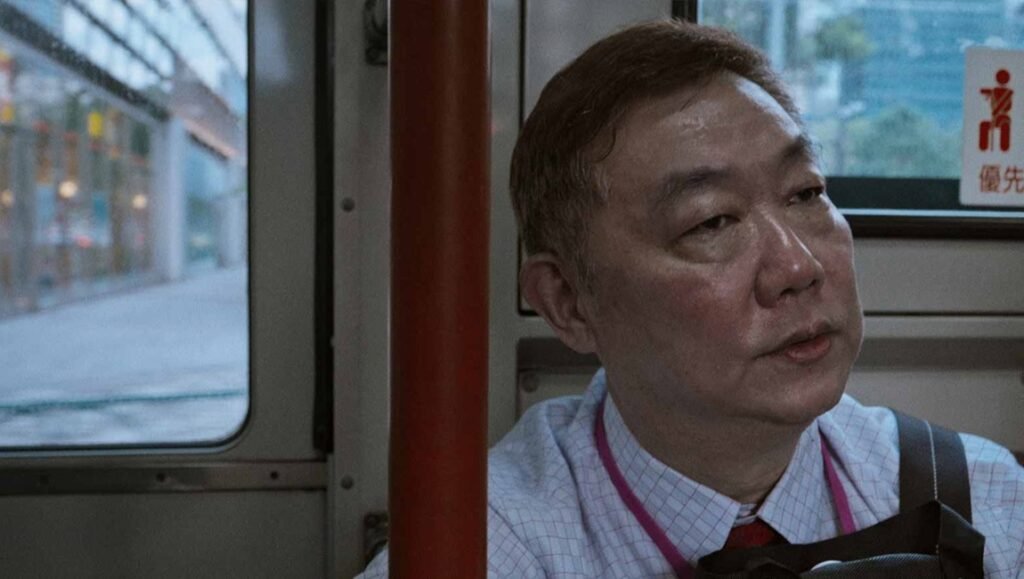
The concert film documents the ecstasies of performance; the biopic narrativizes its painstaking preparations. In between these two modes stands the rehearsal film, capturing the sensitivities of perspectives and personalities amid its crafting of the larger, all-encompassing purpose to which these individuals are devoted. True to form, Jac Min’s Coda outlines — broadly — its purpose and justification: the Victoria Chorale, one of Singapore’s premier choirs, prepares to compete abroad for the first time in 18 years, except that its conductor is aging and its choristers are not getting any younger either. But the film also bears witness to the lived experience, not just of the alumni choir and its many challenges and tribulations, but also of singing per se, as ritual, performance, and shared meaning. Beneath the sweeping portrait of a community lies an intimate snapshot of its dreams and anxieties.
For the most part, Coda spotlights the Chorale’s conductor and master, Nelson Kwei, whose rehearsals in the lead up to their participation at the 2024 Tokyo International Choir Competition take on an immersive yet nostalgic quality. Kwei, having led Victoria Chorale since the 1980s as it admitted singers from both Victoria School and its affiliate junior college, proves a steadily unremarkable presence at times, declining to lord over every note and decision produced by his students. The choir, on the other hand, reflects a quintessentially professional sensibility despite being firmly non-professional — a nuance possibly lost outside of Singapore. Sopranos and tenors of varying ages and life stages converge on their scores without fanfare or fuzz; the alto and bass sections similarly come together as one in a months-long marathon of honing and polishing their voices. There is talk of the overseas championships and accolades as mere validation reflective of the country’s “product-oriented” approach even to artistic pursuit. Whither the stars that shine bright?
Whether this is a fault or feature of Min’s patient but sometimes polished survey is hard to tell, for Coda never quite commits to either formalist observation or rabid sensationalism. Instead, a communal time capsule emerges, harboring the sounds of grandeur and great beauty as the director effectively presents the Chorale’s full repertoire onscreen: a calculated eclecticism of devotion (Palestrina’s “Sicut cervus”), English tradition (the popular hymn “At the River”), untrammeled Romanticism (two of William Blake’s poems adapted for song), exotic folk ritual (“Bin-Nam-Ma” by Alberto Grau), and more. Coda’s throughline remains conventionally grounded in the high stakes of Tokyo, as tension, stress, exuberance, struggle, and anticipation alternate between its rehearsals and sound checks. But it is no less evocative for that; as Kwei and his collaborators dissect Blake’s “The Angel” and delineate its persona, that of a “middle-aged housewife with a butter knife,” the film comes alive as a testament to the dynamic poetry latent in acts of craftsmanship. Like the haikus bookending its many chapters, the film thrives in its little spaces and frissons, its inevitable conclusion more a casting call than a permanent farewell. As its maxim states: the “triumph fades,” until the next round of victory, but the “memories stay.”
Comments are closed.