
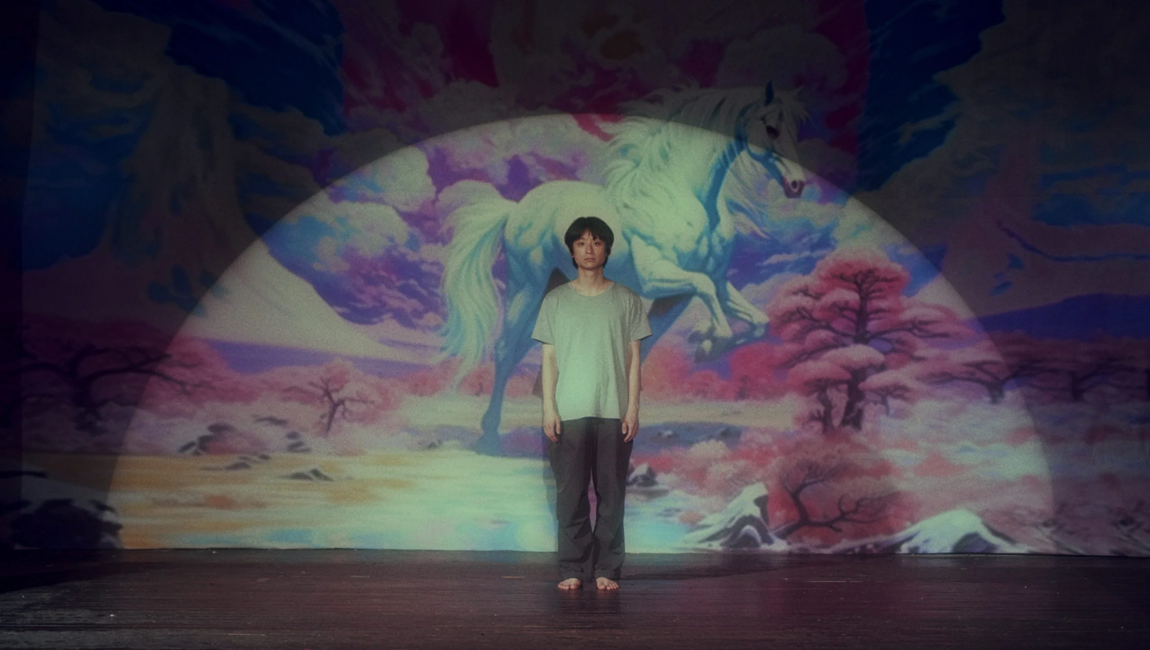
There is a playful disconnect between the title of Mokya Shin’s EASTER and its subject matter. Although South Korea’s most prominent religion (after atheism or simply having none) has been some variant of Christianity, inspired first by the fall of the Joseon kingdom and then by the rise of its capitalist successor, the teachings of Jesus aren’t the subject of scrutiny or instruction in the film. Following the director’s feature debut Cruel Optimism, which screened at Jeonju earlier this year, EASTER instead positions Buddhist mantra and mythology as the elusive backdrop against which the memories and biography of one Seokja come alive. At 68 years of age and formerly a cabaret star during the nascent heyday of South Korean transgender nightlife, Seokja retains much of her vivacious charm, revisiting the bittersweet past along with its alternating currents of joy and despair while reimagining their existence outside of fateful history.
EASTER, then, sports a quiet timelessness that sustains and embraces the various contradictions that necessarily follow from its enterprise of myth-making. Shin’s modus operandi adheres to the docu-fiction, his camera gazing reverently at its subject’s weathered yet resilient visage; at the same time, a young man (Lim Jin-hyo) gradually traverses a lost past into waking life, into a gently mentorial relationship with Seokja. Staged possibly as a dialogue between the older woman and her younger, pre-transition self, the film mines a great deal of pathos from its frank but pleasant naturalism. When Seokja recollects the collective history of the queer and drag movements or commiserates the ravages of time to the already brittle physicality of trans beauty, it is less an excavation of wanton and violent discrimination than it is the foregrounding of a broader truth: that love’s fragile passions on this earth may be encoded in performance and narrative, but never really immortalized. “To be natural without pretense,” she reflects, “is the most beautiful thing.”
Alongside EASTER’s documentary leanings comes a more interpretive negotiation with a legacy at once intensely personal and unavoidably political. Amid the detritus of an abandoned building — a former club, perhaps? — lounges Seokja’s adolescent persona, who in casual repose recites one of the many accounts of the Buddha’s myriad lives. As a ship of stranded merchants wash up at the town of Sirīsavatthu, made illusory by its she-goblin inhabitants (or rakshasas), the merchants are in turn seduced and tricked into marriage with the latter before being grotesquely butchered and consumed. The specter of the monstrous feminine might be parsed from the tale’s regaling of its contemporary audience, a point made even more prescient by the undeniable essentialisms and prejudices inherent to physical gender transitions, like the “cutter club” Seokja describes. As much as she, intrepid pioneer in the country’s inaugural transgender show, has witnessed the comings and goings of friends and lovers countless times, there remains an unspoken and irresolvable barrier to love and self-acceptance for many: “those who explore and like us, they are highly likely to return to women, to the authentic women. Then the pain is only ours.” Spoken thus, these words are a hardy acknowledgement of the buried and martyred selves awaiting their eventual recognition and resurrection.
Published as part of 2026 FIDMarseille — Dispatch 2.
Comments are closed.