
If readers were born, variably, between the ‘80s and ‘00s, chances are they hold dear a core memory of Stephen King discovery. In most households, his work occupies a unique space (for this critic, a unique shelf, far above the rest, suspended by two rusty screws and guarded by a winding piece of black thread around the spines, along with Peter Straub, H.P. Lovecraft, 1and Anne Rice): both forbidden and ubiquitous, crass and respected, equally represented among the career academics, the blue-collar lunch break readers, and even the ultra-religious, there is no type of household he cannot and does not occupy, and no literary upbringing is exempt.
Reading King in 2016, beginning first with my father’s badly dogeared copy of The Dead Zone and working my way up to Carrie, Christine, and It, was the first instance where a writer seemed to be speaking at me, from my own time, despite many of them having been published 20 or 30 years before I was born. He has a knack for a perceptive, diligently simulated “present day” for his works, standing for any time, distant or otherwise, and making it our own. The same way that every sci-fi novel occupied the same murky “future,” every Thomas Hardy or Charles Dickens “the past,” King has the uncanny ability to project himself anywhere in the present moment, as if he were talking behind you, in front of you, from your own mouth.
There’s no point in comparing King’s Carrie to Mike Flanagan’s Amazon Prime miniseries. Most do not, in the 21st century, find any entertainment in comparing Brian De Palma’s oft-canonized rendition with the original novel for about the same reasons: a “great” film precludes itself from adapting a given work. No one, in 2026, praises The Godfather for Coppola’s creative liberties against Puzo’s novel. Why? Because it is great, and greatness, necessarily, comes only from the mind of a great artist. Carrie is a great film, its central images so ingrained in popular filmmaking that to speak of it in any capacity except as a defining work strikes critics as ridiculous.
Mike Flanagan’s Carrie would agree. There’s no need to interrogate a work that has already been canonized. When Flanagan is given the sorry task of following up De Palma’s act, it is a taller order than his last few television works. The Haunting of Hill House, and its Jamesian sequel Bly Manor, are easily digestible departures from two canonical but sufficiently distant horror tentpoles. Their distance, supplied both by age and an increasingly unliterary American audience, allows for interesting associations, collages of other weird fiction archetypes to slowly trickle into these familiar stories. While not always successful (and in the case of Bly Manor, definitely not so), Flanagan’s work is refreshingly honest in approach, nerdy without broaching into pedantism, and seems frequently on the edge of genuine ingenuity, even if he quite never arrives.
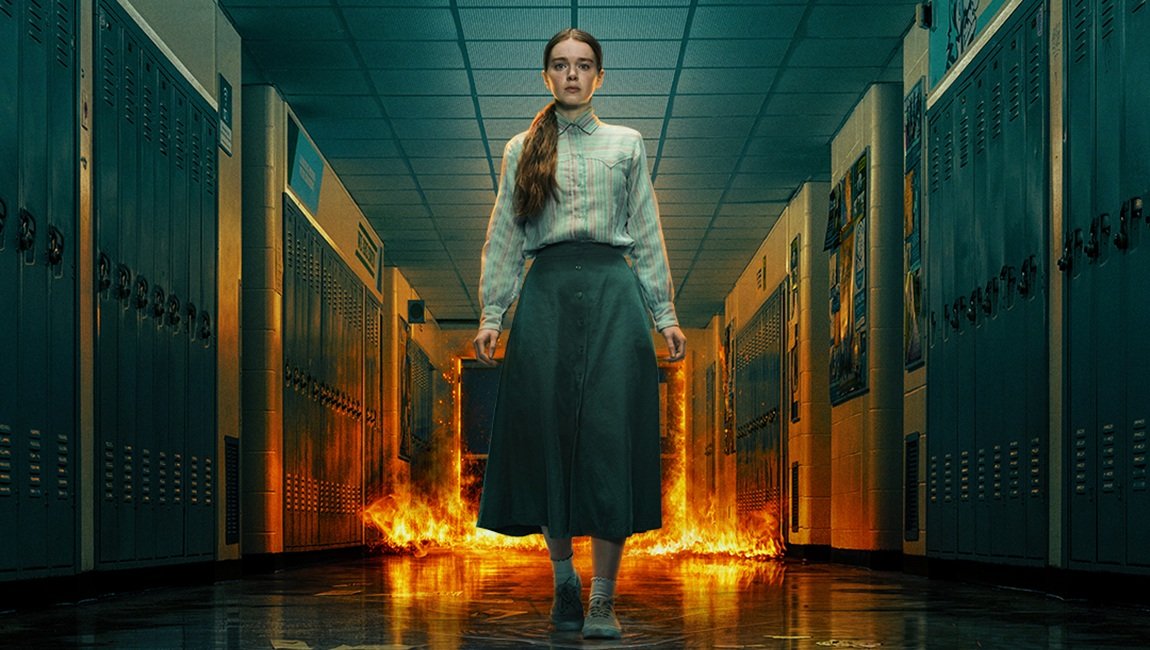
For Carrie, Flanagan makes the right decision to eschew De Palma’s film completely, and embrace the novel as a broad-strokes representation of King’s larger worldview. There is very little of Sissy Spacek’s rendition of the character in Summer H. Howell’s bright, eager Gen-Z version. The tensely developed, “clenched fist” atmosphere is also muted for a more classic TV drama lightness, occasionally exploding in fissures of extreme violence. Certainly, Flanagan studied King’s work meticulously (and one cannot overrate King’s direct involvement in most of these recent adaptations); the show mimics the digressive, winding worldbuilding that many screenwriters don’t know what to do with. The horror in a given King novel is heavily outweighed by minor drama and detail. Indeed, suspense appears more as aberration than rule in even the most disturbing works, something he has in common with Shirley Jackson and Henry James. It is from these digressions that “the present” in King’s stories begins to coagulate, where the atmosphere tightens around a reader. If Flanagan’s only accomplishment was to successfully emulate this writerly effect, he could rest as one of the finest horror stylists in our modern era.
Of course, he does not. Carrie’s milieu is the same slapdash approximation one comes to expect from the Gen-X genre filmmaker, a vibe that could broadly be described as “early nineties with phones.” Despite the eight-hour runtime, actors never find legitimate ground in Flanagan’s sleepy town of Chamberlin. Sets are dressed neatly, in faux-’80s garbled wallpaper and the more suave brutalist monochrome. No composition is any more distinct from the usual direct-to-streaming sleekness. The narrative discusses school shootings, social media bullying, suicide, and pedophilia as “modern” concerns, but without a modern eye they are just so many concerns, dull aches in the back of the head, fit to be ignored, since one cannot possibly believe they occur in any kind of present, or occur at all, in such a bleakly undiscovered world.
Nor are the performances any more pronounced. Howell is almost interesting in her low, affected Southerness, but Flanagan rarely allows her any gestural consistency. One cannot help but compare her to Spacek when there is so little else to speak of. Her brutal struggle against the bindings of character is sorely missed in a show replete with actors perfectly comfortable with falling in line. A tragic case-in-point: Carrie’s now-iconic confrontation with her mother. Carrie enters the “prayer closet” where she spent most of her childhood to repent for the explosive display of her powers. Her mother (Samantha Sloyan) comes from behind and struggles to do what needs be done: to kill her daughter, and end the suffering of her family forever. She approach with her knife and slowly begins to pray. Much of the praise for the show that has emerged so far focuses on Sloyan’s revisionist take on Margaret White, complicating her position as a tyrannical fundamentalist. Instead, she is a victim, thrust into an unfamiliar and unfriendly world as much as her daughter is, and Flanagan inundates the audience with vague descriptions of girlbosshood and sympathy. But Margaret White is not unsympathetic in DePalma’s film, or King’s novel. Much of these “revisions” are implied in Piper Laurie’s performance, if not confirmed ad nauseum as Flanagan does. Ultimately, he does not trust Sloyan to adequately perform these contradictions, or more likely, does not trust himself to write them. The scene goes on in somnambulatory sheepishness, without visual intrigue; one cannot feel hatred for Margaret, much less sympathy, or any emotion otherwise.
The microcosm of this iconic scene speaks volumes as to this adaptation’s general approach and quality, which amounts roughly to dead-on-arrival. Unlike the books that towered forbiddingly on every American family’s bookshelf, there is no mystery held in Flanagan’s work, no danger of it creeping inside your imaginative predilections. The show is not of the present, nor of the past. It floats — in distended form — into an unassuming empty space, where all the other thumbnails of Amazon Originals lie forever.
CREATOR: Mike Flanagan; CAST: Summer H. Howell, Samantha Sloyan, Siena Agudong, Alison Thornton, Joel Oulette, Josie Totah; DISTRIBUTOR: Prime Video; STREAMING: October 7; RUNTIME: 7 hr. 3 min.
Comments are closed.