
If there is one group that’s not short of tales to tell, it’s Wu-Tang Clan. That rather comes with the territory whenever you’ve got nine members, but more particularly so when one of those members is Ol’ Dirty Bastard. In fact, it may be harder to find an uninteresting angle to discuss a group that had weeks that were more eventful and scandal-filled than other groups’ whole careers. They’re fascinating, even to the point of being a head-scratcher for a documentary filmmaker. Where do you start with a group as vast and with such a complex network of relationships? It’s like trying to carpet Escher’s staircase. Perhaps the way in is through one of the group’s outer members, one of the myriad figures that has at some point nestled in the Wu-Tang family tree, which is itself somewhere between a four-dimensional shape and a magic eye painting — an incomprehensible, ever-shifting landscape of changeable quality, infighting, and commercial double-crossing. It’s this approach that Joanna Natasegara takes with The Disciple: A Wu-Tang Fable, and it makes for patchy results.
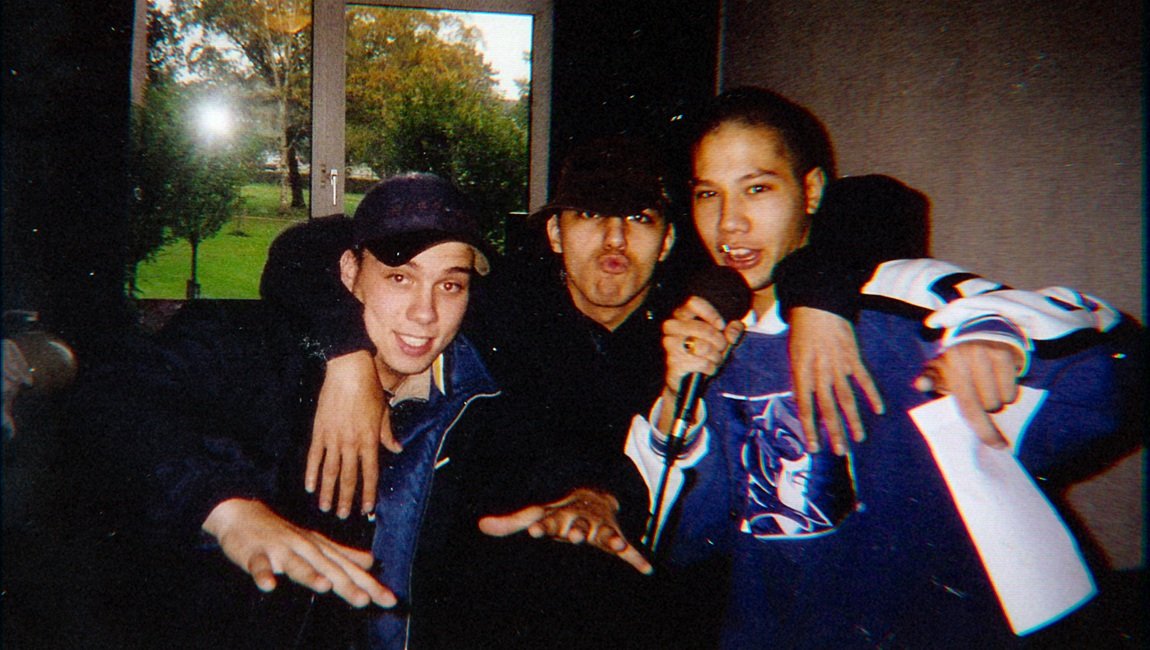
The figure who leads us into the story is rapper/producer Cilvaringz, who, when we meet him in the early ’90s, is a hip hop superfan quickly undergoing the process of year zero radicalization that Wu-Tang brought about for so many when they first appeared. Through his own archival footage, we follow Cilvaringz through forming his own group, where, eventually, through some convoluted back and forth, he meets his heroes and winds up hype man and confidant for the group’s mastermind, RZA. It’s in many ways a remarkable story, the obsessive fan turned insider, but beyond the overall shape there’s not a great deal of interesting meat to this stage of the story — certainly not enough to make up for the first hour of The Disciple.
Instead, during this stretch we’re brought through a meandering tale that has little eye for what details are of interest and which aren’t. This seems to be more a Cilvaringz problem than Natasegara, who lends the film a pulse that at least keeps it moving, but time and again the rapper tells stories that toddle along to nowhere, devoid of insight, punchline, and — most crucially — reflection. Much of the early years’ footage plays out like a straight-faced Rap World, but at no point does anyone acknowledge how corny the whole affair is — just a stream of laughable posturing and fake New York accents, yet presented as if all involved are clearly the heirs apparent to their heroes. This means that when Cilvaringz is eventually invited into RZA’s fold, the documentary runs with it as a deserving moment of triumph, rather than bothering to examine why RZA may want a fawning Yes Man on hand.
The film toddles along like this — except when it gets bogged down in a charming but structurally pointless Cappadonna tour of Staten Island — until it finally bursts into life once the nominal reason for the doc’s existence comes into play: the story of Once Upon A Time in Shaolin, Wu-Tang’s one-off album which was a lightning rod of controversy when its single copy was bought by investor and all-round devious prick Martin Shkreli. Finding some narrative direction in this, Natasegara’s film also spreads its net wider, Cilvaringz falling by the wayside a little, and a broader cast of narrators coming into the fold. The insights into the album’s bizarre rollout — provided by Cyrus Bozorgmehr, the creative advisor on the project — feel like a genuine peek into the shambolic nature of such an undertaking, and the rebranding process that turned it from a Cilvaringz album into a Wu-Tang one is an interesting reveal. It helps that Bozorgmehr can formulate an anecdote in a way that many of his fellow talking heads are incapable of, even if he does somehow manage to turn a night out with the RZA and a Shaolin monk into a non-event, but there’s a momentum toward this period of the film that is lacking elsewhere.
However, the documentary still suffers from a fundamental lack of inquisitiveness or desire to critique what went on. The criticisms leveled at the album both externally and from other members of the group (new interviews with whom are conspicuous in their absence) are noted but given pretty short shrift, and there are some very pointed uses of the term “democratic majority” whenever any members criticize the project or their alleged underpayment. The Disciple has a habit of simply asking the questions the viewer may have, such as over its validity as an actual Wu-Tang album, but then fails in investigating beyond asking the question itself, uninterested in getting its hands dirty. In a strange way, this lack of desire to question the narrative being spun — its evident PR purpose of presenting those responsible’s side of the story — is the film’s most interesting aspect. It isn’t a flattering comparison, but it even puts one in mind of ZEF – The Story of Die Antwoord, the odiously stage-managed defense of the titular duo. What is being defended in The Disciple, of course, pales in significance (Die Antwoord stand accused of some really horrendous activities we won’t go into here), but what the two documentaries share is that their artifice reveals a great deal about those behind them and their desire to control the narratives surrounding themselves. It makes for a strange watch, revealing only in how little it wants to reveal, an at times lively but ultimately ever-thickening smokescreen.
DIRECTOR: Joanna Natasegara; CAST: RZA, Cilvaringz; DISTRIBUTOR: Netflix; STREAMING: October 16; RUNTIME: 1 hr.
Comments are closed.