
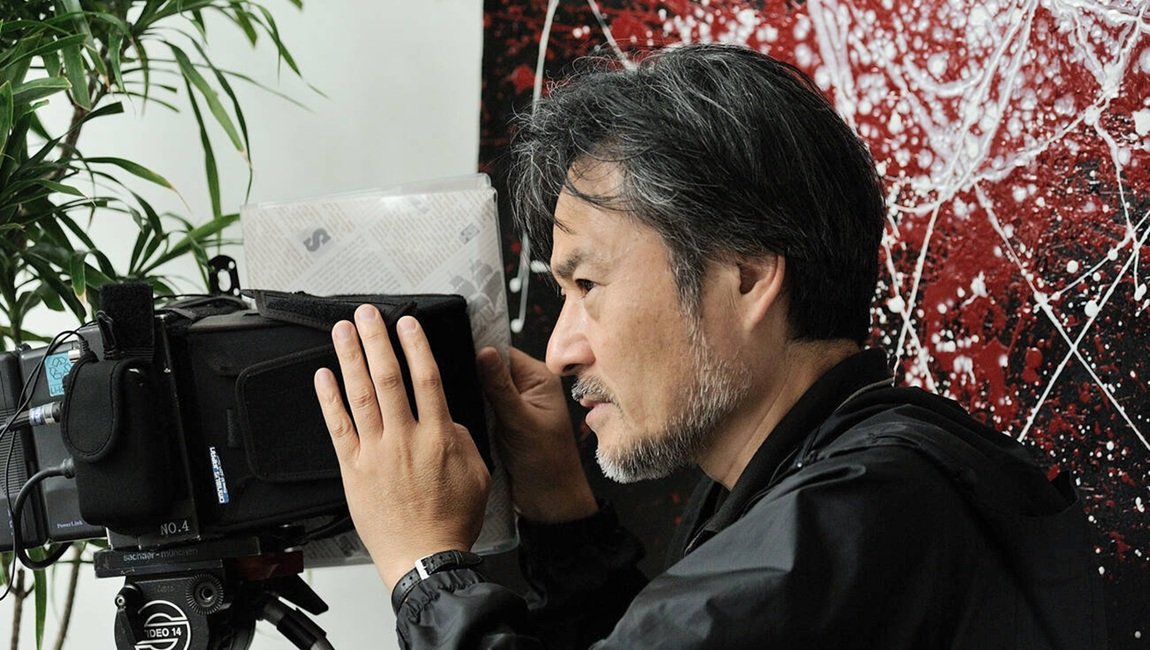
A legend like Kiyoshi Kurosawa might not need any introduction, but what you find out when talking with him is that he’s very different from the filmmaker you likely have in your head. Avuncular, self-efacing, with a wry sense of mystery, he’s far afield from the bleak, often cynical films he’s most known for. That shouldn’t be too much of a surprise, however, because even in the Pulses and Cures of his filmography, there’s plenty of humor hiding within his dissonant frames.
Yes, his canonical works are enshrined for a reason, they really are that great, but Kiyoshi Kurosawa has been almost everywhere within Japanese cinema. From his early days in Pinku films (Kandagawa Pervert Wars) to a long spell in V-Cinema (The Suit Yourself or Shoot Yourself series), he’s played in every sandbox. Following last year’s excellent (and very funny) Cloud, a bumbling thriller centered on the shady world of anime figure resellers, Kurosawa is back in select theaters with a double feature of isolation and urban sprawl.
Chime and Serpent’s Path couldn’t be more different (the man will tell you that himself), but both traffic heavily in the monotony of living in a world of hollow violence. The former, originally released as an NFT, is a 45-minute horror film centered around a chef driven mad by a contagious hum, or chime, if you will. A companion to Cure, it nestles nicely under your skin, leaving you on a final shot for the ages. Serpent’s Path (not to be confused with Kurosawa’s own 2024 remake) follows a low-level Yakuza who, with the help of a friend, attempts to enact revenge on the man he believes murdered his daughter. A black comedy of errors with a different face seemingly chained to the wall at every turn, Serpent’s Path is a leveling morality play on the futility of vengeance. You’ll always end up eating your own tail trying to chase that brief feeling of relief.
Made in different decades with very different intentions, the two films playing together make a bit of sense. Kurosawa has always been fascinated by the loneliness of modern living and how its silence can seep into your psyche. Sometimes that manifests as a broken psychosis. Other times, you’re led down a path of moral degradation from which you can never return. A brief flicker of grainy digital in Chime whispers back to the V-Cinema underbelly of Serpent’s Path.
As both films recently hit rep theaters thanks to Janus, I sat down for a brief but spirited chat with the ever-elusive Kurosawa. I came away with far more questions than answers, but with someone like him, I’m not sure I’d have it any other way.
(Thank you to Aiko Masubuchi for translating)
Brandon Streussnig: While these films couldn’t be more different, I do think there’s a loose connection regarding the monotony of daily living and urban sprawl. It manifests differently in each film. I’m wondering, how do you reflect on this now, with Chime versus when you made the original Serpent’s Path?
Kiyoshi Kurosawa: The two films were made with very different backgrounds. In some ways, it’s hard for me to really find what the commonality is between the two films, but now that you mention it, they both do have in common this idea of city life and the people who live there and how the protagonists in both of these films are leading these very lonely lives with no one that they can trust or believe in. On a surface level, it seems as if they’re living a normal life, but they have nobody, and they’re kind of locked inside of themselves, and nobody to really talk to.
However, I do feel that the films do have very real differences, even though they are both set in urban life. Chime was made in Tokyo, an area that I know very well. I would say that with the Serpent’s Path, we’re not quite sure whether the protagonist actually has a daily life, as opposed to Chime, [where] we are able to see how this person lives. For the protagonist of Serpent’s Path, you don’t actually see what he does in an everyday kind of setting. You never see that in the film. There’s actually a question mark as to whether he actually exists.
BS: With them being such different films, from different periods of your life, does their release together cause you to reflect on your past self? Or are you always moving forward, onto the next thing?
KK: Generally speaking, I try not to look back on my past works. I don’t rewatch my past works. There are moments when I sometimes want to rewatch something, but I tell myself to stop. I very much believe that filmmaking happens in the present, it needs to be happening in the moment. It’s born in the present in that way. So I try to forget the past as much as possible when I’m creating works.
Since I really don’t reflect back on what I’ve made in the past, sometimes without realizing it, I do something that I’ve already done before. I’m always caught by surprise when somebody tells me, “Hey, this is something you’ve done before,” because I believe that when I’m making it, I’m doing something completely new or a fresh new cut, but then I’m told that in fact, I’ve done something very similar before, and I’m very surprised by that.
BS: Many people can get hung up, rightfully so, on your wide shots or images of empty space, but what compels me are the close-ups. I think it’s so unnerving seeing someone react to what we can’t see, like in Chime. Can you tell me a bit about your approach to that?
KK: As you say, I think a close-up to the face inherently brings about a very powerful meaning through the image, and so I believe that it can’t be used lightly. Generally speaking, I try to capture the entirety that includes the body of the actor, how they walk, how they act, how they react, all of these things. I try to capture in equal measure, but in moments where I very much feel like this moment is it, that’s when I really try to capture a close-up. As you might have noticed, I don’t use too many close-ups, and maybe because of that, you actually notice it even more. I really only use it when I feel that it must be used in that moment.
BS: For as cynical or bleak as your films often are, I think many miss just how funny they can be. Sitting in the absurdity of it all can lead to quite a bit of humor. How do you find that balance?
KK: I’m not really calculating this balance of saying that, oh, there should be humor here, or this part should actually be more serious. That’s not really how I work. Whether it’s a scary scene or not, I really try to have the same stance and the same approach in whatever scene I’m doing. Sometimes, after the film is made, I realize that something’s funny and I’m surprised by that because it’s not intentional.
In thinking about this, I wonder if, and this isn’t limited to filmmaking, but when we’re making movies, at the end of the day, the crew and the actors, we’re all very much seriously working on this film and trying to tell the truth. Ultimately, the things that we’re working on are a lie to an extent, but we’re trying to deal with it as if it’s reality. We want the audience to experience it as if it’s reality. Because we are working on a certain kind of lie, I feel like perhaps unconsciously there’s a coyness that comes out of there to say that, actually, you know what, you don’t need to be so serious about this because this is, in fact, a lie. I think this is something that unconsciously ends up coming out.
Comments are closed.