
It’s no secret that Hollywood is currently trying to crack open the secret to Gen Z. What movies get them into a theater? What tests well? Who do they follow, and who do they want to hear from? But for as much as the industry is preoccupied with the social media generation, there is little probing into what preoccupies Gen Z. The filmmakers trying to emulate the thick, protective layers of memes, YouTube personalities, TikTok dances, and sex scene discourse have thus far failed to see this younger generation as more than a series of bankable avatars, as though every twentysomething with a Labubu keychain is some alien race incomprehensible to anyone who remembers landlines.
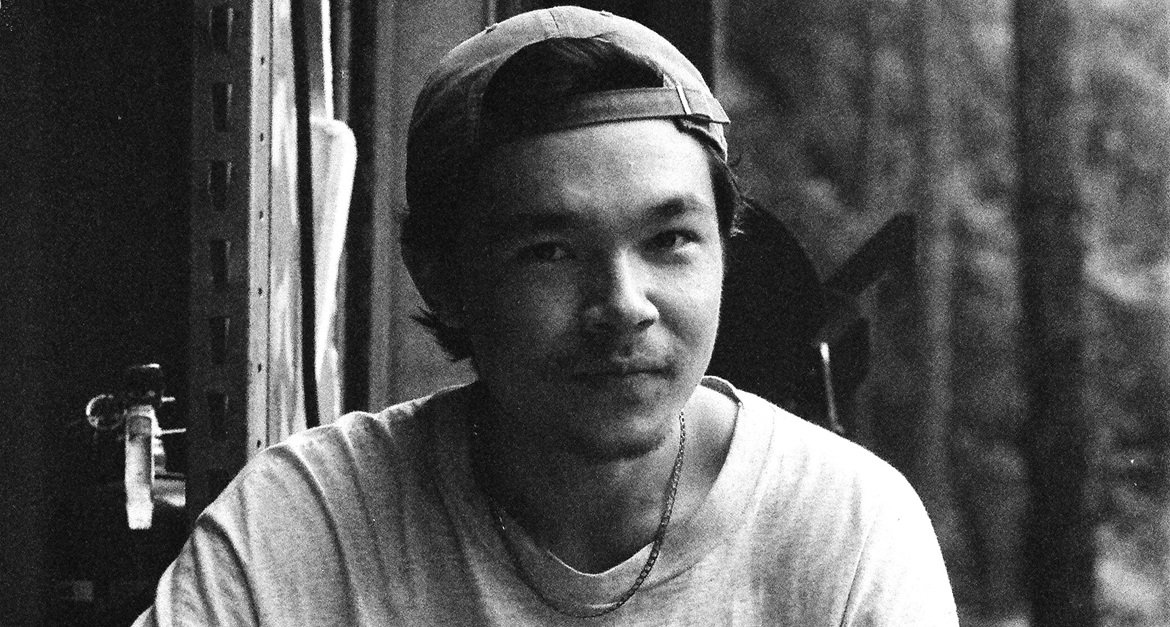
When I first saw It Ends at the Chicago Critics Film Festival in May 2025, I was floored by its strength as a debut for Alex Ullom and majority of his cast and crew. But what surprised me more than anything was that my Gen X dad — who attended the screening on a whim, going in completely blind — really, really liked it. I shared as much while talking to Ullom ahead of his film’s theatrical release.
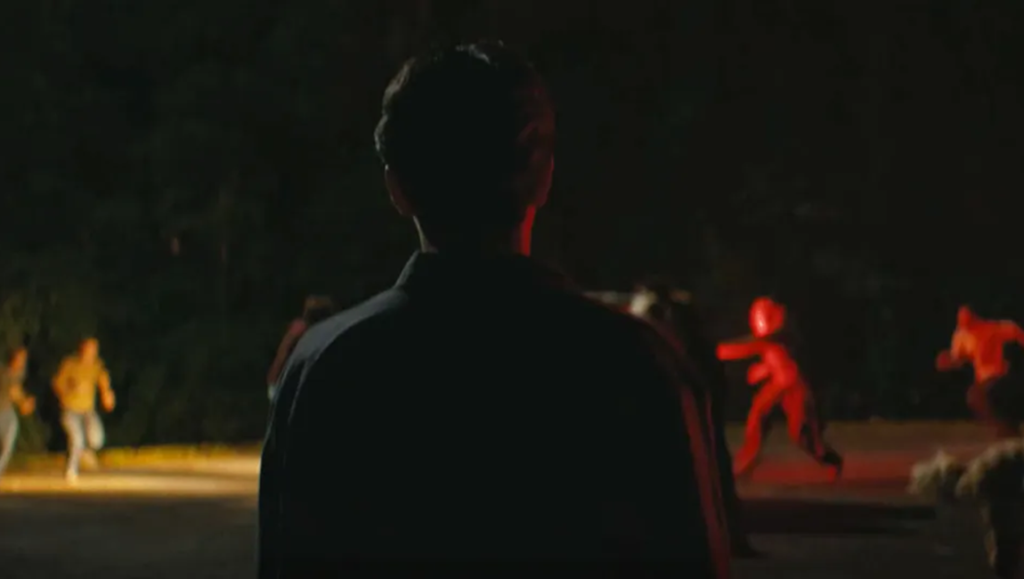
“That’s awesome. Gen X rocks. Gen X has a lot of overlap with [Gen Z],” he said. Whether or not that is true in a sociological sense (though my layman’s brain is inclined to agree), there is a kinship between It Ends and, say, the existentialism of Charlie Kaufman. Ullom’s debut is as much a losing-of-age movie as I’m Thinking of Ending Things, even at opposing ends of an adult lifetime: wistful magic realism; the dead of a neverending road; the fear of a road that ends too soon; the lingering depression beneath it all.
Ullom began developing It Ends shortly after graduating college in the midst of the pandemic alongside Florida State University film school pals Carrie Carusone and Evan Barber. It’s been a long journey from conception to the NEON-distributed theatrical run, including reshoots of a majority of the film. That evolution — the feelings that come right out of graduation, and the trial-and-error, learning, and maturing that comes with more experience — is evident in the movie, and certainly evident while talking to Ullom. It Ends is not borne out of the cynical calculations of trying to get funding or trying to market to Zoomers. The thrifty movie rather comes from a place of evident and shared honesty that’s relatable to all ages.
On It Ends’ press day — “It’s my first one of those, so I’m, like… stepping into it,” Ullom tells me — I talked to the filmmaker about evolving alongside the film, the importance of collaboration, and how he made an endless road in the woods capture the apathy and languor of doomscrolling.
This interview has been edited for clarity and flow.
Daniella Mazzio: I know the movie comes from a personal place of entering adulthood. What I love about it is that it seems to dig past a lot of surface-level assumptions about Zoomers, showing that they might be as prone to existentialism as any other generation. But I’m interested, given the evolution of the film over several years, how your relationship to the movie changed over the course of making it.
Alex Ullom: What’s so weird is that when I first started the process, I was articulating things from a very physiological and emotional place where I was a 21, 22-year old kid with psychosis, and like, “I have to tell the world these things that I’m feeling.” As it’s gotten away — as I’ve gotten older — I think I’ve realized that it’s a lot more of a structural, systemic thing that I was processing. That’s why it becomes a universal experience. The tentpoles of structure that used to hold young people together, whether it was staying on track to get a house or fucking, you know, having a family, those are the things that have dissolved and left us with directions to a place that no longer exists. I think that a lot of my mental health was downtrodden from the technological revolution or things that like, if I was a farmhand, I would not be going through, you know? If this was a different time. That’s why it’s such a very specific experience to young people now. It’s inheriting a kind of burning house. But originally it was just like, “Damn I’m depressed, I need to, like, make a movie.”
DM: This was a collaboration with your producers Carrie and Evan, but it appears that they also wore multiple hats on the film. Could you talk more about that collaboration and what you all learned about filmmaking over the course of this process?
AU: Dude, I learned every single possible thing you could learn. What a supportive cast I had, too. They were just as much producers on this as Evan and Carrie. They were living with the characters for two, three years.
But I think we really learned that the only thing that’s going to get you over the finish line is the support of community, friends, and people you have around you. That’s probably the O.G., real, biggest lesson on making a movie of that scale: the community. I had a day where I was gonna literally destroy the footage because of how much I hated what I was looking at. And they talked me out of it, thank god.
DM: I definitely appreciate them talking you out of it.
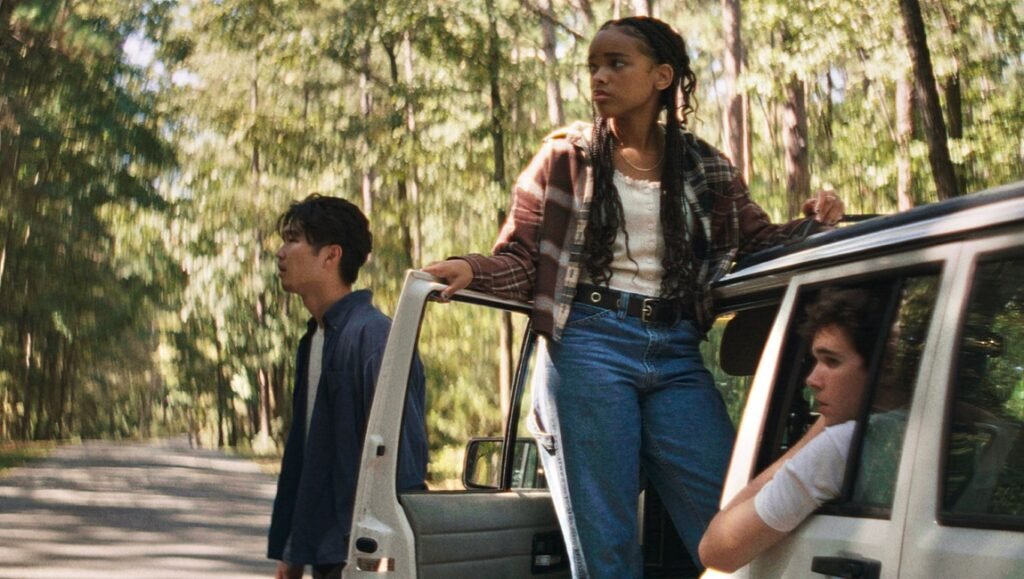
One of the things I really like about the movie too is that it’s set almost exclusively in the woods, which is a common horror trope that’s perfectly primed for the movie’s undercurrent of dread. But I really like how you capture them. Once we get past the initial horror of the set up, there’s a lot of light and warmth, and the sound design suggests a more languid atmosphere than just a purely spooky one. How did you approach creating the atmosphere within this space while also making sure that it stays dynamic despite the repetition?
AU: That’s a great question. The same kind of thing I was talking about — man, the amount of times I’ve said “Gen Z” is so horrible, but — a lot of the ways that young people process terror and shock is a slow malaise or ennui. You know, it’s equivalent to scrolling on the internet and seeing someone’s head get blown off and then the next video is the Geico Lizard, you know, twerking, and that is the closest I can put to what it feels like to go from shock and dread and panic attacks to like, “Alright, I guess I gotta fucking lock in and turn this paper in.” That’s what I wanted the movie to feel like. Visually, it was just the difference between having a lot more cuts and shot design sequencing in the first half, very shaky cameras, and in the second half it’s more simple filmmaking. Just locking the camera off and letting the actors be stuck in the world.
DM: I’ve heard shooting in a car is frustrating for directors, too, because there’s only so many shots you can take.
AU: [Chuckles] Yeah.
DM: Continuing on the sound and the atmosphere, the song “Over the Hill” by Ginger Root —
AU: Yeah, I fucking love that song.
DM: Can you tell me how that became a structural piece in the movie?
AU: I think it was right place, right time. It perfectly encapsulates the feeling of trying to be happy even though you’re trying to get over the hill. I don’t know, it’s honestly on-the-nose a bit, but it’s a perfect juxtaposition with what they’re going through. But a lot of right time, right place — a song that was on loop in Spotify at the time for us.
DM: With the sound design as a whole, I think it’s really impressive how much you’re able to do with, again, staying in such a limited and confined space. Was there an approach you had when working on the sound design, especially with the sound of the woods?
AU: I never thought that we would get any sort of sound mix, so I pretty much bought a 5.1 sound thing for my apartment so that I could do the mix. I was kind of living in the car while mixing the movie. I was living in a one-bedroom apartment with three other guys, and that experience was like I was in the car. I was in a cramped-ass apartment mixing the world. And obviously the sound design carries the movie. I also think sound design in general is quintessential when you have no money.
DM: While we still have some time, I saw the cast announcement went out for your next film and Mitchell Cole [Tyler in It Ends] is going to be in that as well.
AU: Fuck yeah.
DM: Tell me a bit about working with Mitchell and what you look forward to in working with him again.
AU: I fucking love Mitch. I mean, I love my entire cast. I didn’t even know who the cast was gonna be, and I had to get Mitch into the contracts before we even closed on the movie. I had to say: “This is his role. That’s done. He’s in the movie.” I think he really enjoyed seeing his name. You know he used to tile roofs in the panhandle of Florida. He literally was an HVAC repairman when we shot It Ends. He’s just a salt-of-the-earth, awesome fucking guy, and I love working with him.
And I just want to emphasize that It Ends only works because of its cast and the powerhouse performances.
DM: I’m looking forward to seeing what you do and what the rest of the cast does. Thank you so much for chatting.
AU: Thank you, Daniella. And thank you for supporting us in Chicago. That was awesome, that was one of my favorite screenings. Tell your dad hello for me!
Comments are closed.