
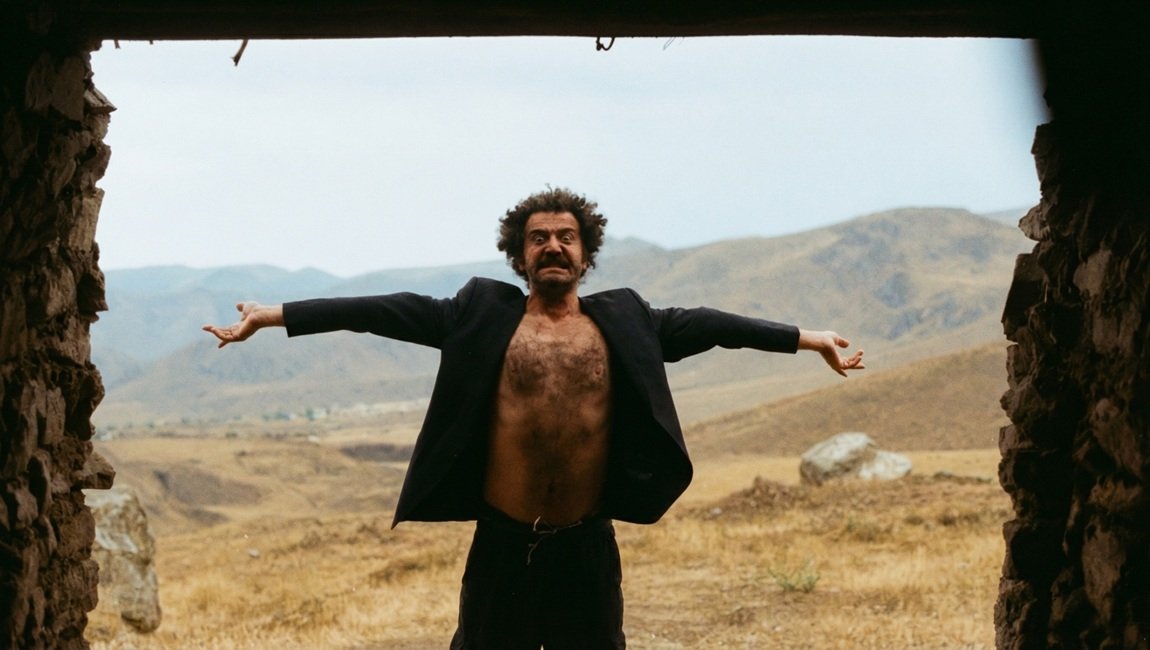
Karim Lakzadeh seems to be someone who takes his competition titles very seriously. His latest film, Living Twice, Dying Thrice (LTDT from now on), premiering in the ACID section of the Cannes film festival, is a trippy journey in search of some form of stupor, be it death, drugs, music, or a heady mix of all three. Opening with a shot of a valley shrouded by fog, LTDT swiftly establishes the remoteness of its locale through a series of shots that take us to a collapsed underground mine. Taking advantage of the seclusion of their environment, three miners — Ibrahim, Dawoud, and Youssef — wishing to escape from their miserable jobs and lives, decide to fake their deaths to obtain a handsome compensation from the government. However, this disaster has resulted in some (unwanted, for them) spotlight from the media, which in turn forces the environmental ministry to deploy damage control methods to keep their image intact. Moving from one clandestine location to another, these miners request their family members to go to the government boards and claim their compensation, but the authorities demand proof.
Unlike many serious-minded films of this stripe, LTDT is less interested in the development or fates of these characters, nor in overblown satires of government ineptitude, but is rather characterized by a retreat from visible public and political life. Drifting from claustrophobic, dingy mines to fogged, vast expanses of (hitherto) endlessly isolated, ashen landscapes to the purple haze of underground music bars — where Iranian and “Western” influences freely commingle through drug-addled experiences of music that encompass a diversity of genres from classical Iranian music to techno — the three miners and their families retreat into these societies of seclusion, those which surface only to fulfil a societal or governmental obligation. Even though Lakzadeh includes some scenes at dawn near the mines, LTDT is a nocturnal shapeshifter of a film; nocturnal in terms of its shrouded secrecy — both in its locations and clandestine nature of its production — fuzzy moods and the association with sleep the word conjures. Intrusions from and interactions with the mainstream society are inflected with this desire for withdrawal, with Lakzadeh halting any plot momentum for surrealistic diversions. Only family members existing within this fringe, such as Dawoud’s GoPro-wielding sister who employs a burkha as a ninja costume for her grainy YouTube videos, or Youssef’s singer sister who’s a habitue of many underground bars, are drawn into the film’s ambit, as Lakzadeh gradually eradicates our “conventional” expectations of plot, narrative, character, and even Iran, luxuriating instead in a series of images, songs, and locales that point to an unknown world tenuously tethered to everyday reality.
Contrary to our expectations of an “underground,” these societies aren’t exactly one of resistance, but an overpowering sedation. A sense of world-weariness prevails even amidst all the formal inventiveness (featuring both rapid edits and slo-mos, found footage and fiction), the terrific soundtrack being the only source of jubilation and play for us and the characters. Lakzadeh’s gloomier palettes, some certainly wrought out of necessity because of the nature of his clandestine shooting, only accentuate this feeling, suspending the images in a limbo with no hope. Seldom has a murder felt this sedate, let alone the plights of other miners affected by the collapse, and consequently, the predicaments of the three miners gradually assume no importance at all. Lakzadeh dispenses with all plot and politics not because he wants to reimagine the possibilities of existence and cinema, but to merely coast in the drugged calm of secrecy. His film is certainly successful in this regard, but his withdrawal also eventually robs his images of their impact. The Iranian indie underground never ceases to be fascinating, but what seemed like the emergence of an exciting cinematic language gradually fizzles out into a soothing soporific.
Comments are closed.