
Kogonada’s latest film has a “latest by Kogonada” problem. The video-essayist-turned-director burst onto the scene with Columbus (2017), a quiet, poetic meditation on friendship and architecture that also co-starred Haley Lu Richardson. In zi, her presence is actually one of its death knells; her character Elle is a variation of the manic pixie dream girl (MPDG), as coined by Nathan Rabin, existing solely to guide the lead character through life’s spontaneous delights, mysteries, and optimisms.
zi starts out promisingly enough, a “return to form” for Kogonada after his disastrously melodramatic and pedestrian A Big Bold Beautiful Journey (2025). Here, we are back in the hands of a master of framing, each shot capturing Hong Kong’s kinetic awe with a reverence that could rightly be compared to Wong Kar-wai, except this comparison soon leaves one feeling guilty as the film trudges beyond its first act and enters the domain of the soap opera.
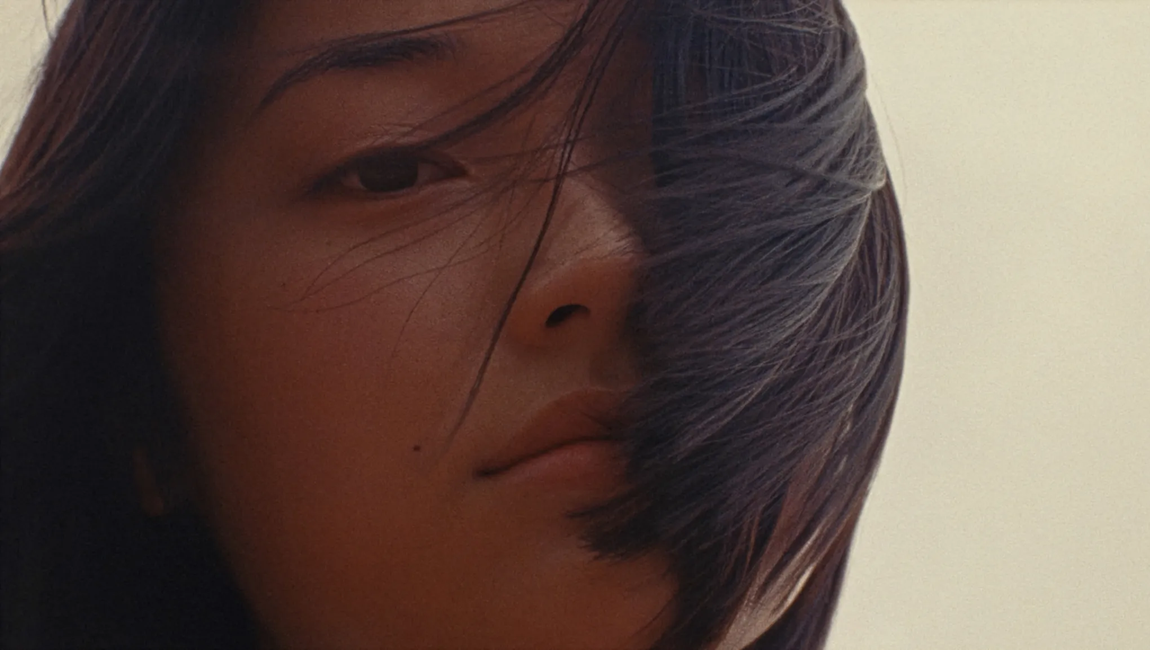
Zi (Michelle Mao) is a woman who seems to be in the throes of a mental health crisis, frantically wandering Hong Kong’s streets while hallucinating future occurrences involving herself and another woman, an American (played by Richardson) donning a blonde wig, combat boots, and baggy jeans. All the while, a man (Jin Ha) suspiciously follows Zi from a distance. In these opening sequences, the viewer is untethered from plot, constructing inferences based on gorgeous shot composition, whiplash-inducing tracking shots, and hyper close-ups, a camera that is as enamored with architecture as in Columbus.
Lo and behold, the women eventually run into each other, thus consummating Zi’s visions. We learn of Zi’s possible tumor that is awaiting diagnosis, of Elle’s fraught relationship with the man named Min who’s been following them, of Min’s role as a doctor or researcher of some kind at a local neurological center that might be able to help Zi, and — most dispiriting of all — Elle’s penchant for recording the sounds of the city and trying incredibly hard to convince the distraught Zi to see the beauty in everything around her even as a looming illness takes hold.
The city symphony peels back and makes way for a far less interesting film, one that sheds its experimental groundwork, its initial sense of mystery that left us adrift alongside the protagonist, trapped (or perhaps ensconced) in a churning, roiling cityscape. Although the original idea of the MPDG pinpointed an archetype that prompted “broodingly soulful young men to embrace life and its infinite mysteries and adventures,” in zi the character of Elle acts toward this same goal primarily for another woman. But yes, also for a broodingly soulful young man who at one point does a painfully awkward a capella rendition of John Denver’s “Leaving on a Jet Plane” for Zi and Elle, who sit there listening, feigning interest, knowing full well they’re in fact in love with each other and had just made out minutes before Min’s karaoke routine. In any case, the principle of Richardson’s MPDG remains the same, and Zi’s illness that forms the central conflict of the film ends up fetishized — sexually, emotionally, visually, narratively. As for Zi, she recedes into a void as our MPDG usurps the spotlight.
This may all sound rather confounding, hokey, scattershot, and to that the only promise this writer can make is: it is. For a brief time, zi isn’t that, but it very quickly overplays its hand, and proves that it absolutely should have been a 30-minute short as opposed to a 100-minute feature. Kogonada’s latest is, unfortunately, Kogonada’s latest and not much more.
Published as part of New/Next Film Festival 2026 — Dispatch 1.
Comments are closed.