
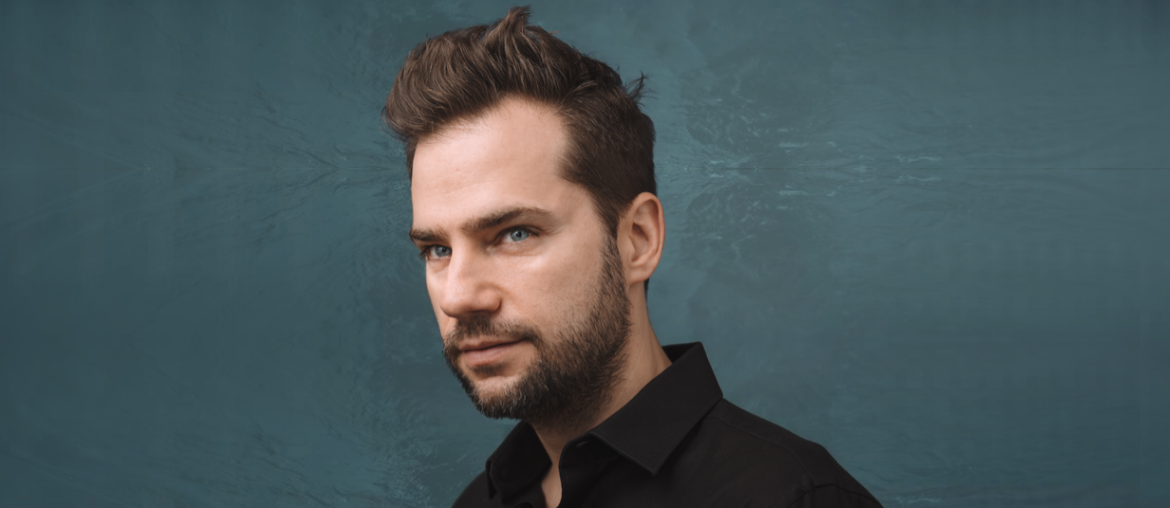
The documentaries of the Polish virtuoso of stylised nonfiction Michał Marczak resist any neat taxonomy, as their proximity to their heroes and spectacular command of the visual reach far beyond the label of hybrid. From a young recruit at a remote outpost in At the Edge of Russia (2010), through the Berlin NGO trading sex for environmental causes in Fuck for Forest (2012), to the delirious nightlife of two Warsaw students in All These Sleepless Nights (2016), Marczak renders reality in a cinematic language tailored to each protagonist, immersing the viewer in the very texture of their emotions and circumstances. His latest gem Closure excels in that craft and sensitivity.
The film’s hero is Daniel Dymiński, whose sixteen-year-old son Krzysztof was last seen in 2023 on a bridge over the Vistula, Poland’s longest river. As the disappearance became a national media event, Daniel, suspended in the purgatory of uncertainty, has searched the river ever since with every method and device he can reach, suffocating with grief yet unable to let go of hope.
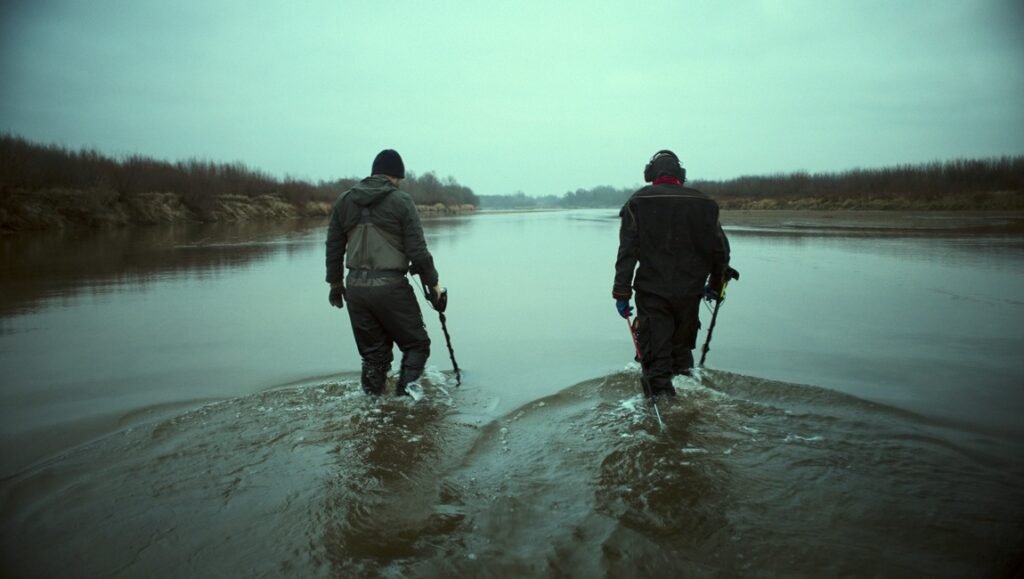
Marczak crafts the immaculate look of Closure with an unobtrusive immediacy that portrays Daniel in a way other media, and especially more conventional documentary modes, could not. Joining the searches himself, he conveys Daniel’s spiralling pain through the nauseous yellow palette of the riverbank, through the camera sinking into the bottomless murk below, and through drone shots that rise high above, taking in the river in all its vastness, as bold symbol of a father’s loss.
Closure carries the gripping tension of a thriller, reminiscent of David Fincher at his best, yet where fiction would reward its hero with a solved mystery, Marczak, faithful to reality, finds heroism in the strength to accept help and the solace of helping others. Grand as its form is, the film never eclipses Daniel, whose sorrow and endurance outgrow every image, and it is in rendering his feelings on such a granular level that Closure becomes an ingenious cinematic study of grief.
With Closure finally reaching US cinemas amid a relentless festival run, I spoke with Marczak online while attending the Ji.hlava Documentary Film Festival, where the film also screens. We discussed how his authorial form offered a counter-perspective to the media frenzy around Daniel’s search, how he filmed through fog and raw emotion without intruding on the moment, and how Daniel, in turn, helped Michał overcome a grief of his own.
This interview has been edited for length and clarity.
Sonya Vseliubska: Preparing for our interview, I was struck to discover your debut feature, At the Edge of Russia, which feels so uncannily ahead of its time. How do you look back on it today?
Michał Marczak: Thinking of it now, I’m not sure I nailed exactly what I wanted to say, but growing up in Poland I was aware of the evil influence Russia had on us. That was a time when people were saying that Russia was supposedly becoming a Western country and its imperial ambitions were over, so let’s build the pipeline, let’s establish great relations with them. Yet, thanks also to my parents, who had a very good understanding of the geopolitical situation, I understood that this was, of course, not true. That was the reason to make this film, to reveal that they do have these sick imperial ambitions, which are very much present in this little outpost, where seven people guard a border with no man’s land and sing songs about “Great Russia”, conveying this mythos of fighting for these lands. But what the hell do they need them for? I always found it crazy that they’re the biggest country in the world and they want more and more.
I’m happy that there’s a scene where [Dmitry] Medvedev becomes president and they take down the portrait of Putin, and they’re like “we’re just gonna put it away in storage for a little bit”. Of course, everybody knew that he [Putin] was coming back. I find it baffling that the West didn’t see it that way. When the invasion of Ukraine started in 2014, Poland was one of the few countries that called it that. It’s fucked up, because it was essentially when this war started.
SV: I bring it up because, in the most overarching sense, your films often follow men in extreme circumstances shaped by various social forces, and At the Edge of Russia already shows the emergence of your expressive visual style in framing those protagonists. To what extent does Closure feel like entirely new territory for you?
MM: Definitely new, because the things I made before were much lighter. Closure is the first film that influences someone’s life. When we screened All These Sleepless Nights, for instance, some people would come up to me saying that I had captured their youth or a certain lifestyle, which is always nice to hear. But Closure is the first movie where I get very sincere messages from people sharing that they’d had dark moments in their lives and thoughts of doing something to themselves, but that after seeing the movie, they know they’re never going to do anything. Some of these are voice messages, and when you hear the voice of a young person and the emotion they say it with…That’s just something extremely moving. Actually, both families portrayed in the film are receiving these kinds of messages from audiences, which is so important for them. I never thought I would make a film that has an impact on people, nor that I would make such an emotionally challenging movie, which would not have happened if I hadn’t met Daniel by accident.
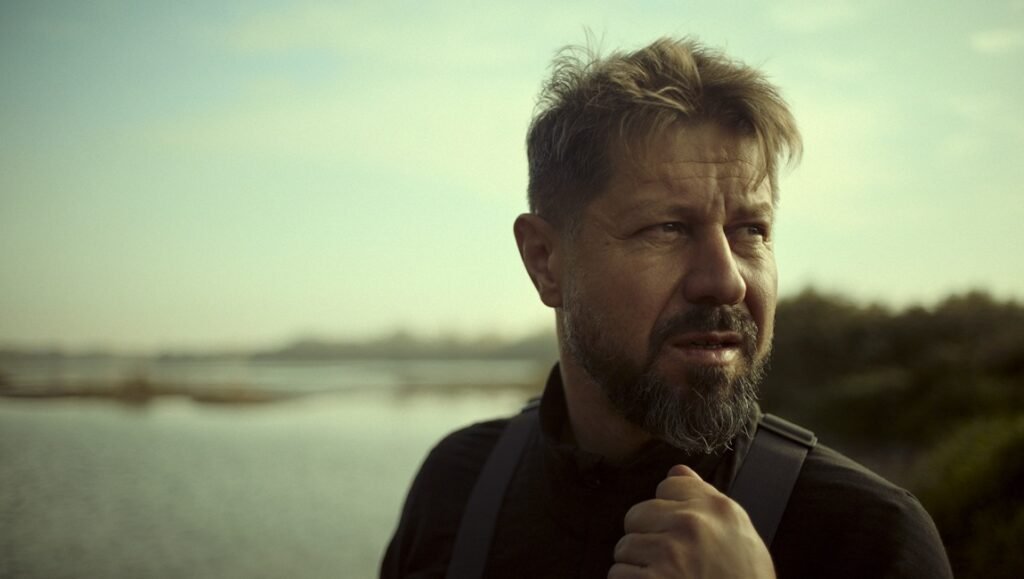
SV: It is such an incredible story that you met Daniel by accident, in the middle of a case so widely covered in the Polish media, of which you were unaware. What connected you two so strongly at first?
MM: Indeed, it was a complete accident that I met him. I was going down the Vistula, which I know so well because I love the nature there, and knowing the terrain and the river was our initial connection. I try not to watch television, so I was not aware of Krzysztof’s disappearance. Even if I had been, I would never have imagined making a movie by reaching out to the family on purpose. It’s not something I would ever do.
With Daniel we connected on many, many different levels. I lost my dad in a car accident when I was eleven, and grief is something I had never really gone through until this film. I’m also now a father of two, and even before I met Daniel, I was aware of the mental health crisis and was thinking about how to raise kids and navigate the dangers they’re gonna see on social media. And then I meet a man who is basically asking those same questions, but in a completely different situation.
Only after I met him did I watch the media [coverage]. I saw how Daniel and [his wife] Agnieszka opened up their story to the world, let the cameras into their house, allowing filming, for example, in Krzysztof’s room. That gave me a little courage, knowing that I’m not intruding on someone’s intimacy, because they’ve already shared their story. But there was also another emotion. The TV reports I saw were honestly done so badly, with such a true-crimey approach to the story, completely missing the point. They did not do justice to the case, and I think they over-sensationalised it. That also hurts the family, because when you sensationalise a story in that way, you risk fueling up speculation about the family, which opens a space for internet hatred, and they received a lot of it for absolutely no reason. It’s the worst thing you could do to a family in that situation.
Having spent a considerable amount of time with Daniel, I realised that what I was seeing on television or in these social media snippets was absolutely not the person I met. It did not even scratch the surface of what he’s going through, of the questions he’s asking himself, of the emotions he has to face, and of him as a person. That gave me the courage to offset the harm those things in the media did.
SV: Given how you describe the media coverage, how did you build that dignified exquisite register as an answer to that simplification, giving Daniel the stature of a fictional hero without losing the rawness of his real pain?
MM: I really wanted the audience to feel emotionally what it is like to be in the moment he’s in, what it is like to live in the unknown, to be on this endless search on the boat. To do that, you can’t have talking-head interviews; you have to use all the cinematic language available, like careful shooting, editing, sound design and music. The quiet moments without dialogue convey much of the narrative and the emotions, so that you can look at faces and come up with your own answer about what the person is feeling. Ultimately, it is about leaving room for the audience to fill in the blanks with their own interpretation, according to their own life experiences.
For that you need these cinematic moments of quietness and silent close-ups, and they have to be shot in a certain way, because if it’s sloppy and unclear, it doesn’t really work. For me it’s never about the form, because the form always has to follow the story.
SV: The form is indeed very strong, but the emotion feels much bigger, which also resonates with the way the tragedy is ontologically poetic, and giving it a larger form does not necessarily mean aestheticising it.
MM: Exactly, so the form came organically from what we needed to achieve story-wise. I felt that this story required that kind of canvas, the widescreen, even what you could call epic cinematography. It’s also there to convey the scale of what he’s up against, to get a sense of how wide this river is and of what lies beneath its surface, which is dark and full of mud. At the same time, there’s a moment in the film where nature also starts playing an important role in letting go, so it was essential to capture it in a very poetic way for the audience to feel that.
SV: Speaking of nature and form, for me the most splendid sequence is when Daniel goes out to the river yet again at night, in dangerously thick fog. Your camerawork is at its grandest in such extreme weather, which coincides with a peak of exhaustion in the search, yet you remain so compact and unobtrusive. What was your setup in scenes like this, and how did you sustain that technical finesse in such emotional moments?
MM: Thank you for that. I’m a big gear nerd, and I’ve been fortunate to do this for many years, so the skill came over time. This was definitely the most challenging, demanding film, but also the one where I was finally able to complete my vision of how documentary can look. A lot of that comes from my years as an editor, and from my mentor Dorota Wardęszkiewicz, who worked with Krzysztof Kieślowski and edited over 60 Polish films. She taught me so much of what is needed to tell a story, so while I’m shooting I’m always thinking of the edit, of exactly what I need to make a scene.
All the gear is my own, and a lot of it is modified, because most of what is out there is not designed to work the way I need. So I work with an engineer, and we use 3D printers and carbon fibre to modify or build our own gear, so that it’s super light and the footprint, as you said, is very compact. I also train physically before I shoot. All my gear fits into one backpack, and I can shoot with it for eight hours without changing a card or a battery. It’s all weatherproof too, because on this river water was splashing, rain would come, fog, and I had to be ready to shoot in all of it. I’m also grateful that the technology has moved on so much. I use the latest equipment available, like LiDAR focusing systems, and I modify it too.
It is all extremely demanding, but I assume, or at least hope, that you don’t feel it from the outside. That’s the whole thing for me: it has to work effortlessly, it has to feel carefree, like it’s nothing, because for the protagonist it just cannot feel like a thing. That’s why sometimes I don’t even have a sound person. It’s just me and the camera, with nobody intruding, so I can move 360 degrees and very fast. I’m in perfect sync with the people, after having spent so much time with them, we have this symbiotic relationship and it comes naturally to them too. And then I can get into this Zen state of losing complete track of time and space, and that’s when I get something truly great.
SV: This feels like that symbiotic relationship at its fullest. You have been open about the hybrid approach of All These Sleepless Nights, which you insist is not the case with Closure. Was it your technical growth that made staging unnecessary, or a moral boundary you set with Daniel?
MM: Yes, with All These Sleepless Nights, we did stage things; we went back or reenacted and then combined it. It really is a hybrid, because some scenes are 100% documentary, just capturing reality as it unfolds, and other times we would ask the protagonists to go back. But in Closure, that just didn’t feel right. That’s one of the reasons why it was so challenging, because from the start I felt that I didn’t have a second chance. So I had to be extra focused, and the gear had to work every time; there was simply no downtime. You take the camera and it’s gotta work, and you gotta get the focus perfect, because if you don’t, you don’t have the shot. It was super demanding, but that is such a great demand to have, because then you just have to be in the flow. That was another new thing for me, to work at that level of concentration. But again, the emotions were so high that it just came naturally.
SV: What does change is your role in the film, as you move from an observational register to a more participatory one. You helped Daniel behind the scenes, and at some point you start talking to him from behind the camera, and it feels like Daniel himself needs that conversation.
MM: At the beginning I didn’t think I would be a part of this film. I thought it would just be an observational documentary. There were more people helping him, all of them for free, so many times on these searches we would be with other volunteers. But as time went on and the weather got colder, it ended up being just me and him. We would sleep on the island, because it takes a lot of time and effort to take the boat out of the water and put it back in, and he doesn’t live close by. To save as much time as possible, it was logistically easiest to set up a camp with tents, so we could search for ten to twelve hours, or however much light we had, then come back to sleep on the island, wake up in the morning and continue again. At night we would sit by the campfire and talk, and I realised that a relationship was building and becoming a part of what we do. I always film with a monitor, so in every scene I shoot, I have eye contact with the person, without hiding behind the camera. I started filming [our conversations] because they had become a thing, and it became obvious in the edit that they had to be part of the movie, because that’s what was happening. That’s why I always try to be very open, and adjust the form and my earlier ideas to what reality brings us.
SV: There is also an interesting dynamic, as Daniel’s meticulous plans and search tools in a way mirror your own work with gear. With grief so prone to turning into obsession, there seems to be something interconnected in the technology of searching and of filming. Did you ever feel that the two started to fuel each other?
MM: I don’t think I fuelled the obsession or the search in any way. Daniel had a very specific agenda of what he wanted to do, the places he wanted to search, and the techniques he wanted to try out. I hope I did help a little with the human side, just by being there with him. I’m just very grateful that this movie turned out this way.
We had a premiere in Poland the other month, and at the Q&A people asked Daniel how he was so natural in front of the camera, and he said, “Listen, it’s just because I was so into the things I needed to get done. When Michał wasn’t filming, he was helping me, and when he picked up the camera it just felt natural.” Having seen himself on the big screen, he also apologised on stage to his wife for, perhaps, hiding certain emotions or not allowing her to grieve in a certain way. He said that if he could go back in time he would never do that again. It’s beautiful when a film can also help a little in this process.
SV: If I may ask, did making the film, or just being with Daniel, also help you personally to work through the grief of losing your dad?
MM: He helped me a lot. Thanks to Daniel and the questions he was asking me, about how I dealt with grief and how much time it took me to process it, I realised that I ran away from it. After my dad passed away, I would binge-watch four movies in a cinema after school, and after some days it seemed like the pain went away and life resumed.
I found myself many times just observing Daniel as a father. Soon I started getting memories of my own father that I thought I didn’t have. I’m very thankful to him for helping me overcome something I had put away for thirty years. I hope I was able to help him a little too, and we are very good friends now. This was a special film in that regard; many times it didn’t feel like a film. But on the other hand, we both knew that if we got through this and made this film, and if others saw it, maybe we could help people facing such tragedy in some way. This is what empowered us to go on.
SV: This is what makes Closure so profound to me, the idea that grief is perhaps survived by helping each other and finding solace in shared pain. It is a less romantic consolation than one might wish for, and all the more honest and humane for it.
MM: I actually just got a text saying that Daniel found a seventeen-year-old girl who had been missing for many years, and I think it’s over ten people that he’s helped find now. It is very moving and extremely sad at the same time that people often have no other way, because the police stop searching after seven days and they have no one to turn to, but they have Daniel.
I very much believe that human connection is the most important thing in those moments. You lose someone, and of course nothing is ever going to make up for it, but you need warmth, you need someone to just be there with you, and, weirdly, even for me thirty years later, it still played a big role. It doesn’t have to be at that moment, but you need other people to go through it with.
Comments are closed.