
Indonesian horror films are having a moment. Not only are home video labels like Severin producing box sets of the films of genre icon Suzzanna, but contemporary directors like Kimo Stamboel, Timo Tjahjanto, and Awi Suryadi have put out gory, energetic movies regularly for more than a decade now. One of the benefits of the streaming era is that it’s never been easier to see all of this stuff in the West. Joko Anwar, the man behind Satan’s Slaves and Impetigore, is at the top of this cohort, and his new film, punnily titled Ghost in the Cell, is a socially-minded horror-comedy that brims with enough zany ideas to enliven its digital gorefest.
The film takes the common milieu of a prison movie and throws a murderous ghost into the fray. No bumps in the night or ethereal whispers here; this specter simply appears to its victims as creepy, trypophobia-inducing mirror images of themselves before eviscerating them and staging their dismembered corpses as complicated art pieces. All the CGI goop, which does not aim for anything approaching realism, serves as a cartoonish touch, an indication of a gleeful pop sensibility running through the film rather than an earnest attempt at shock.
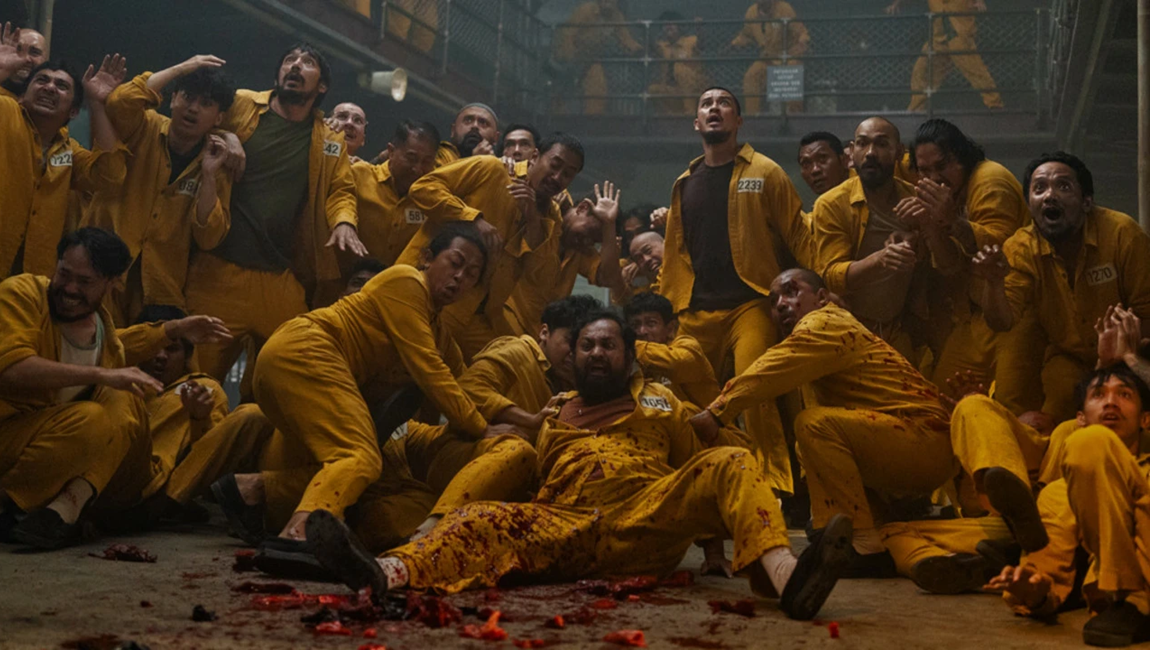
Arriving at the prison at the same time as the ghost is Dimas, a muckraking young journalist framed for the murder of his editor (naturally, the ghost did it), who quickly falls in with a motley bunch of nice inmates. They’re a crew of simple but well-drawn characters, each with a distinct archetypal personality that lends definition to their comic banter. Among them is a devout man filled with wisdom, a non-believer called Six who can see auras, and their de facto leader, Anggoro, who serves as a peacekeeper among prisoners.
In giving Dimas the rundown, his new friends highlight the different factions on the yard and draw attention to the social stratification present, which we are meant to take as reflective of Indonesia on the whole. For example, while the working-class convicts live in dingy conditions, those wealthy individuals locked up for white-collar crime enjoy the cushy suites of Cell Block K, a stand-alone complex located apart from the rest of the institution. Repeatedly, the poor conditions of the prison are made out to be specifically Indonesian as characters state “This is Indonesia, not Norway,” but the situations are generally recognizable and, outside of blunt statements, Anwar does little to make the political concerns feel specific. Plus, for however much Ghost in the Cell insists it’s taking on institutions, most of its non-supernatural conflict is between prisoners themselves.
Once the ghost starts butchering its victims, Anwar finds a quick pace and maintains it energetically. There is a sense of fun motivating the director’s camera moves, music choices, and scenarios. He doesn’t simply move from one gruesome scene to the next, but throws in dance sequences or martial arts combat and, later, excitedly combines the two. The prison environs are drab and gray, but the prisoners’ bright yellow jumpsuits and the bright splashes of blood provide enough color to match the surprisingly goofy tone.
It’s a shame, however, that an otherwise vibrant, ostensibly socially conscious film like this doesn’t avoid some of the nastier cliches of prison films, as in an early episode revolving around sexual assault and a tiresome shower scene involving (what else?) a dropped bar of soap. Another character, the dance instructor in the cell block’s art studio, is a loud gay stereotype who is killed soon after his big scene, which makes the film’s gestures toward empathy ring a little hollow. In fact, all of the characters who die in Ghost in the Cell are ancillary, bags of meat ultimately meant for ripping and tearing. Beyond concerns about dehumanization, the lack of danger for the protagonists means the film often carries on without suspense.
In the end, Anwar narrows his focus, and the movie lands a few of its more important punches against universal targets, revealing itself to be a film haunted not just by a literal vengeful spirit, but by the failures of previous generations whose once righteous ideals have fallen to the wayside due either to exhaustion or the corruption of power. Ghost in the Cell’s concerns are not the deepest or most specific, but they lead to a satisfying ending within the film’s own terms and provide a lively horror movie with a backbone.
DIRECTOR: Joko Anwar; CAST: Abimana Aryasatya, Bront Palarae, Dimas Danang, Endy Arfian, Lukman Sardi; DISTRIBUTOR: Well Go USA; IN THEATERS: October 2; RUNTIME: 1 hr. 46 min.
Comments are closed.