
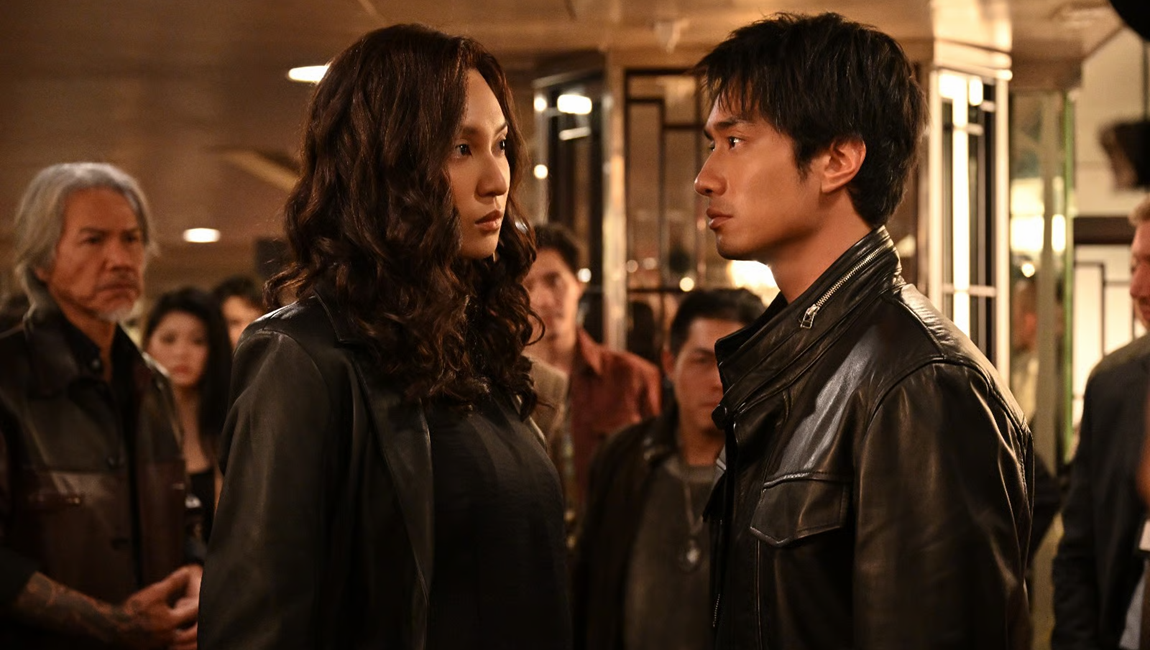
Released in 2012, Leung Lok-man & Sunny Luk Kim-Ching’s Cold War became a gargantuan commercial smash and critical success, breaking domestic box office records and scoring multiple awards at the Hong Kong Film Awards. A sequel followed in 2016, again crushing records (it was the highest grossing domestic film of all time for several years). The two films work as a diptych of sorts, the hijacking of a police van and the ransoming of kidnapped officers in part one seamlessly blending into part two, as throngs of characters deal with the fallout of all the political maneuverings and various corruptions coming home to roost. How then to continue this lucrative franchise almost a decade after its last entry, its aged Hong Kong superstars now even older and less mobile? The answer, apparently, is that it’s time to rewind and make a prequel, introducing younger versions of multiple characters and tracing the beginnings of their moral compromises and slow descents into dirty dealings.
It’s hard to guess how viewers who have never seen the first two films might feel about this blockbuster-sized prequel (the first of two, with Cold War 1995 coming soon!), but Leung, now working solo, has made sure that Cold War 1994 is as overstuffed with intrigue and triple crosses as its predecessors. It would take a sizeable flow chart to identify each and every speaking part in this franchise, along with their various connections and allegiances, and Cold War 1994 dives right in to its own tangled chronology. Meeting in 2017, sometime after the events of Cold War 2, Police Commissioner Sean Lau (Aaron Kwok) is meeting with famed lawyer Oswald Kan (Chow Yun-fat) in search of information on M.B. Lee (Tony Leung Ka-fai), who Lau is attempting to vet for a senior security council job. Kan produces a top-secret file detailing a kidnapping case in 1994, in which M.B. Lee and then head of the Organized Crime and Triad Bureau Peter Choi worked together. Of course, Lee and Choi are adversaries in the franchise’s first two films, but here, as much younger men, they are ostensibly allies, attempting to unravel a case that will wind up involving gangsters, corrupt cops, a powerful local family, and all manner of internal police department struggles.
Critic Sean Gilman has described Cold War as “two halves of a police force at war with each other’s methods and tactics,” essentially the take-no-prisoners, action-prone cops valorized in the movies versus the bureaucratic side more interested in following rules and regulations. That tension carries over into 1994; while the film is technically an extended flashback, it will occasionally cut away to Aaron Kwok and Chow Yun-fat talking in an office in 2017 (presumably an excuse to showcase a couple of icons, with the actors obviously filming their scenes in an afternoon), forcing viewers to put together just exactly how these past events are influencing what we’ve seen in the other movies. It’s convoluted, to put it mildly (most criticisms of Cold War 1 and 2 center around the incessant talk; one’s enjoyment of those films most certainly rests on how much you can tolerate men in offices yelling at each other). 1994 is more action-forward than these earlier entries, at the very least, bringing it more in line with what we might consider the 21st century aesthetic of post-handover Hong Kong cinema.
To really get into the film, one must first consider a wealth of narrative information. Young M.B. Lee, now played by Terrance Lau, is head of the OCTB, and when one of his officers is caught gambling away drugs stolen from police evidence, he gins up a plan to knock over a drug exchange to replace the missing evidence. The job goes awry, an officer is killed, and M.B. stumbles across a kidnapping plot. Young Peter Choi (Daniel Wu) is determined to run interference for M.B., and helps protect him from internal investigation. Meanwhile, the kidnapped man, K.F., is the brother-in-law of Sir William Poon, head of the most powerful family in Hong Kong. The kidnapper, Tiger, is on the run, and the current police commissioner decides to blame the failed operation on M.B. In a panic, Choi tells M.B. to hide out so officers from the Special Branch can’t arrest him, but M.B. instead goes to mob boss Jodie (Louise Wong) to ask her to give up Tiger. She refuses, but assassins attack them and M.B. saves Jodie’s life. M.B. convinces her that powerful forces have hired Tiger and that she must give him up, and she obliges. M.B tells Choi about what he has uncovered, and they plan an assault on a boat where Tiger is keeping K.F. Choi leads the charge on the boat, but tells M.B. that when they arrived on the scene Tiger was already dead, the ransom money and K.F. long gone. And from here, there are a few more twists and turns along the way as players form alliances and then dissolve them, double-crossing each other in various ways.
As in the first two films, many of the power plays here are of the verbal sort, and keeping track of who’s on who’s side and which of the various police squads are feuding with each other borders on the absurd. But Leung does at least peppers the film with plenty of action beats; the initial shootout between M.B.’s crew and Tiger’s kidnappers is a dud, shot too close and cut to ribbons in the edit, but other sequences fare much better. The assassination attempt on Jodie is a fantastic bit of classic HK action, as multiple assailants converge on a restaurant and a bevy of players exchange gunfire in close quarters. There are also a couple of well-staged car chases, and a climactic bit of business that finds two cars crashing into each other while men fight on top of them, all while an airliner preparing to land looms in the background. It all comes to a head with big reveals that rupture the relationship between our intrepid cops, as well as filial dealings within the Poon family and some dastardly subterfuge from the British (who are preparing to hand Hong Kong back to China but do not plan on losing their financial interests there).
It’s hard to shake critic Filipe Furtado’s assessment of the original Cold War, which he described as “slick, engrossing, if somewhat bland.” There’s nothing here you haven’t seen before, from the super hi-def shots of the glistening skyline looming over a skittering populace to the glass-encased offices where life and death decisions are being made. It’s an undeniably well-oiled machine — both this film and the franchise at large — and fans of the the first two entries will surely be satisfied (not to mention enticed by the preview for 1995, which ends this installment). Ultimately, there’s simply none of the personality here that you would find in the Infernal Affairs trilogy or To’s Election films. But no doubt an a massive audience will buy the ticket and take the ride. Sometimes commerce trumps art.
Published as part of NYAFF 2026 — Dispatch 2.
Comments are closed.