
“I have to find a way.” This opening voiceover, soothing yet fraught with anxiety, doesn’t initially sound ironic. It sounds sincere, and fitting, as the image it accompanies is that of a highway viewed through a windshield and hands upon a steering wheel. But then the visual loops, and the voiceover keeps repeating the same phrases. Sincerity becomes vacuousness, and sound and image develop an incongruity — who is this person who has to find a way, when she’s clearly on one already?
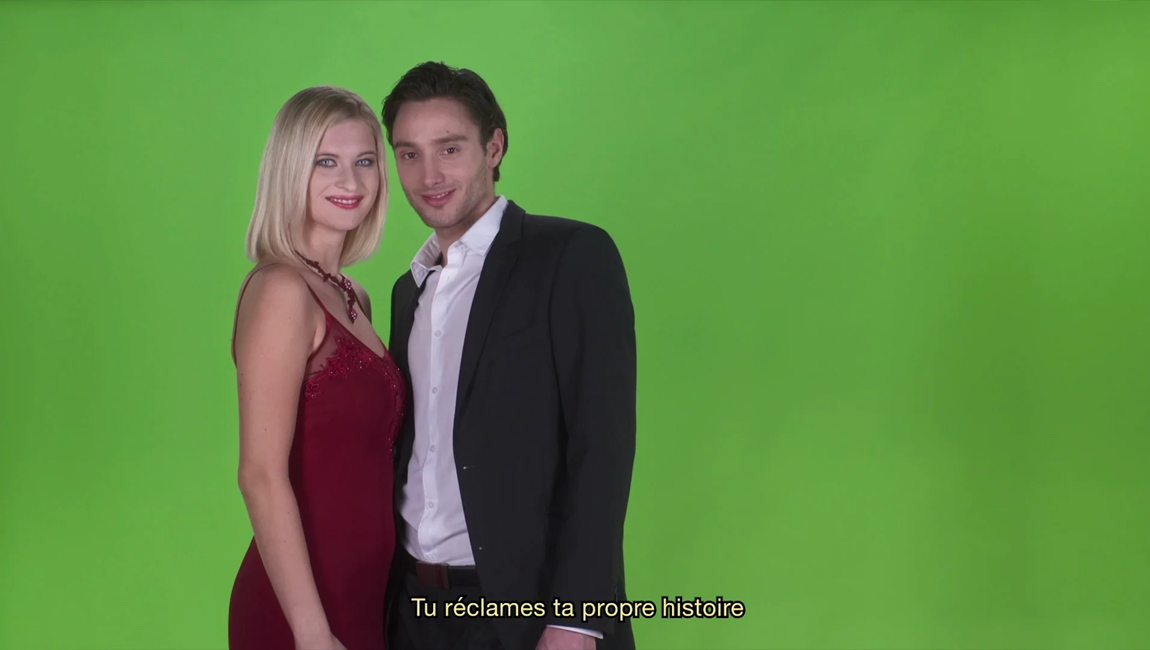
Actor Vimala Pons’ first work as a director, I Promise I’ll Come and Rescue You, has found its way right from this opening gag — wry and gently withering, it’s a collage of unrelated stock footage of banal luxury set to a soundtrack of soothing spa reception music and Pons’ disembodied voice. She muses, rambling, as if expressing the inner voice of imagined characters within the scenes she plays and replays in short clips. She snivels and sobs over a cup of coffee being poured, rants and raves over a POV of a jet ski rider, and comically imitates sexual pleasure over a shot of raw steaks fondled by a gloved hand.
Where Pons’ narration feels most germane to the footage, even if generally in gently mocking irony, the movie is seemingly at its least abstract, though it’s elsewhere that she exposes the thesis behind it. What relation a shot of bread rolls ascending a factory belt bears to her repeated utterances of “my youth” is difficult to discern, and the movie’s fundamental discordance in such moments forms its purpose. These are sterile pictures, clear and uncomplicated, and Pons’ voice sounds crisp and mellifluous — there’s no grain, no grit, no semblance of an identifiable reality. None of it is unfamiliar, yet it has a distinctly alien timbre.
What is identifiable, however, is the disconnect that Pons depicts, the brainrot experience of a vapid inner monologue droning over as the eyes scroll through picture after picture of a manicured unreality. I Promise I’ll Come and Rescue You has the appearance of comfort in its images of sandy beaches and smiling women, but Pons presents these images as a balm that’s less soothing than numbing. If the monotony of it is intentional, and certainly persuasive, it also inspires another disconnect, this one between viewer and movie, creeping in gradually after one notices, processes, and appreciates Pons’ point.
But that’s by her own admission too — in the film’s final clip, her voiceover states: “I have no idea what I’m doing.” It’s not quite true in reality, as the clarity of her critique of the 21st-century manufactured lifestyle is undeniable. And it’s a sentiment that’ll likely resonate with most viewers who can relate to the experience she depicts in this movie, even if it is just one elongated bit on the emptiness of modern life.
Published as part of FIDMarseille 2026 — Dispatch 1.
Comments are closed.