
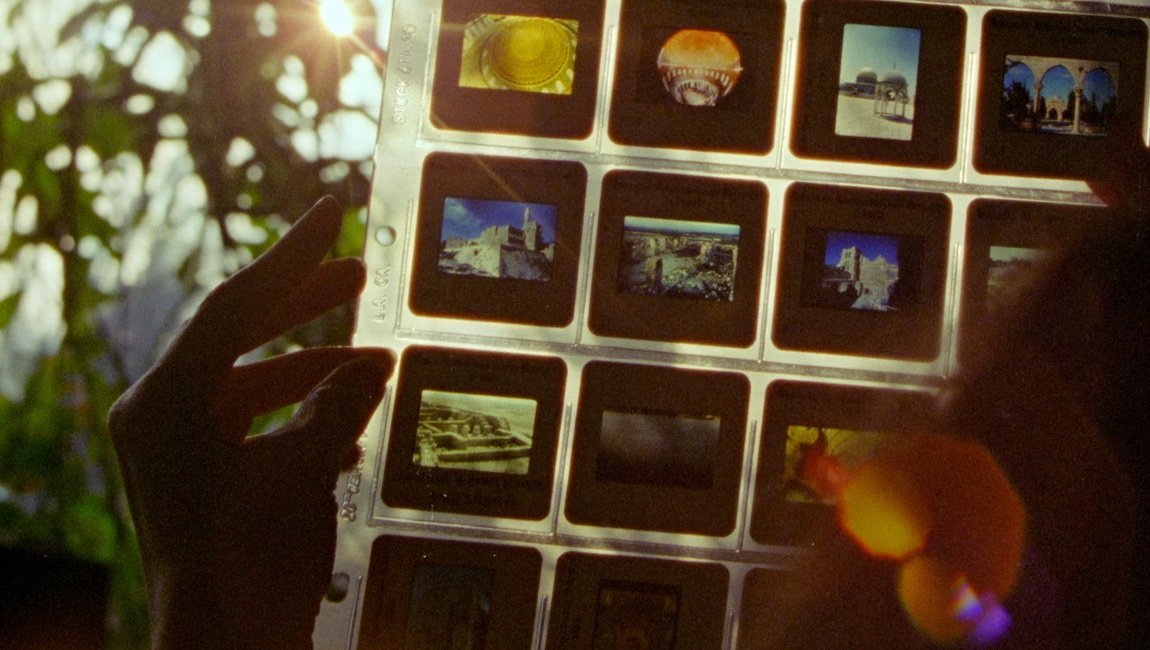
Trash Mountain
The 2026 Toronto International Film Festival seems intent on making lightning strike twice. Last year, Obsession went from a Midnight Madness premiere to one of the most profitable films of all time, while John Early’s Maddie’s Secret went from a tucked-away Discovery title to an unlikely summer smash. With the inauguration of TIFF’s Market, it’s tempting to measure the festival’s success by the size of its acquisitions and the headlines they generate. But that kind of thinking ultimately serves the pockets of festival shareholders more than the artists who worked tirelessly to have this moment. And one thing about Missouri-born comedian Caleb Hearon — he is having a moment.
Hearon has quickly ascended by riding a recent wave that includes a successful stand-up special for HBO, an ever-increasing presence on social media through his podcast So True, and appearances in summer blockbusters like The Devil Wears Prada 2 and Trash Mountain, his first starring role in a film. Co-written by Hearon and Ruby Caster (Bleeding Love), and loosely inspired by the death of Hearon’s own father, Trash Mountain follows Gavin, a Chicago transplant originally from the Midwest who works as an emcee at a drag bar and who, in the week leading up to Thanksgiving, gets a tearful call from his half-sister Abbi (a charming Zooey Deschanel) that their hoarder father has succumbed to his alcohol addiction. Now he must return home to help arrange the funeral and sift through the wreckage of their family home in order to find his father’s Social Security number.
One thing the film makes abundantly clear is that if you don’t have a plan while in the Midwest, the Midwest will make one for you. Gavin’s grandmother, Helen (Jackie Weaver, in a thinly fleshed-out role), is adamant that the local pastor should oversee the proceedings even though neither the deceased nor his kids were religious, and seems to be carrying the burden of grief that neither of her grandchildren seem particularly interested in performing. There are also the questions of Jerome (equally popular comedian Jaboukie Young-White), who keeps hitting up his phone for late-night hookups, and the ever-growing pile of trash outside his late father’s front lawn. It would seem that Gavin’s plans to escape back to the city in time for Thanksgiving are growing increasingly unlikely.
Director Kris Rey — a co-creator of the web series Young American Bodies with ex-husband Joe Swanberg and a director on Lily Wachowski’s criminally underrated Showtime series Work in Progress — has elsewhere demonstrated a knack for calibrating distinct comedic rapport out of her ensemble, and that holds in Trash Mountain. Hearon and Deschanel, in particular, operate as the easy heart of the film, not only on the strength of their effortless back-and-forth, but through their believable portrayal of shared dissatisfaction with having a parent whose addiction has tainted even their fondest memories. As the romantic interest, meanwhile, Young-White’s every small attempt to tease Gavin catalyzes the viewer’s glimpse into Gavin’s defenses, the product of having grown up bruised enough by his relationship with a troubled father. Through all this, Hearon and Caster’s screenplay correctly recognizes that veil of humor as a coping mechanism.
Befitting a film called Trash Mountain, production designer Matt Hyland was dealt a massive undertaking. The construction of Gavin and Abbi’s childhood home is well-realized, not only authentic as the dwelling of a late hoarder, but also as a sort of mausoleum to the wreckage of a childhood that the viewer can never fully understand. Trash Mountain’s preoccupations lie in detailing how thorny our relationship to our own material origins can be — even as thorny as to the people who were there. This emphasis on locating details within the familiar extends even to the economic landscape of this small Missouri town: Young-White’s character has a well-paying job and enjoys his life and cheap mortgage in the Midwest, but Gavin’s loving brother-in-law (played by Kyle Marvin) frets over mounting debt and the rising cost of living. Credit also goes to the film’s development of a welcome and complicating depiction of Midwestern conservatism, where labels don’t matter so much as behavior. Gavin’s father, for instance, wasn’t a bigot, and in fact is described as having been fully accepting of his son’s sexuality, but their conflicts stem more from the fact that he was a gun-obsessed libertarian — even if he wouldn’t vote for Trump. The relatability is real.
Still, for all the laurels that the script and performances earn, the film’s visuals leave a bit to be desired. The three-point lighting, rudimentary shot-reverse-shot setups, and overreliance on coverage that plague many indie — and even mainstream — comedies are all present here. It’s an economical model of filmmaking that rewards improvisation from a very game set of performers, especially for a film shot over four weeks, but this also results in a visual grammar that is aesthetically indistinguishable from any show currently found on streaming. Still, blemishes and all, Trash Mountain serves as a clear capstone for Hearon’s breakout 2026, solidifying him as a performer already able to gather a talented cast and crew and leverage his newfound cachet within the industry in service of a keenly observed and deeply heartfelt story. It’s certain to land as a rewarding debut starring vehicle for Hearon’s fans, as well as those who are bound to know his name any day now — if they don’t already. — ANDRES HERRERA

Idda
Volcano as woman, women as volcanoes. This simile describes the driving force behind Idda, Italian director Irene Dionisio’s deeply affecting memory film about a symbiotic and turbulent friendship. Lifelong buddies who haven’t seen each other in years, Adele and Sofia finally reunite to fulfill a childhood goal: climbing to the peak of Mt. Etna, one of Europe’s tallest active volcanoes. The adventure will rekindle their friendship, but also push it beyond its limits.
“Idda” is the Sicilian word for “she,” and it is also what the locals call Mt. Etna. Dionisio brilliantly conflates the monumental physicality of the story’s natural backdrop and the intimate nature of the personal drama. In the very first scene, ominous shots of the smoke- and fog-enshrouded mountain are accompanied by a rumbling soundtrack with haunting music and the rush of wind that sounds uncannily like human breathing. Cut to a close-up of a woman sleeping in her bed, rustling fitfully as if having a troubled dream. The mountain and the woman each seem ready to erupt.
If this sounds too on-the-nose and the central metaphor too schematic, don’t worry — Idda feels completely organic and spontaneous, thanks to the vitality and charisma of its central performances. Their chemistry is perfect and can even be called magnetic, as Adele and Sofia simultaneously attract and repel each other throughout their journey. Tecla Insolia, one of Italy’s top young actresses — who most recently gave an electrifying star performance as a rebellious nun in Italy’s 2025 miniseries The Art of Joy — is Idda’s key protagonist, Adele (nicknamed Ita). Insolia’s strong, strikingly beautiful profile, accented by her aquiline nose, makes her look almost statuesque; she conveys intensity even in her stillness. Romana Maggiora Vergano is the more free-spirited and spontaneous Sofia, an uninhibited dance instructor who always needs to be in motion. It was Sofia’s wanderlust, sending her on adventures around the world while Adele stayed at home to establish herself as an artist, which led to their split. When they finally reunite for their long-awaited adventure, their planned early-morning departure is delayed after they meet a documentary filmmaker and, sparked by Sofia’s whims, spend a drunken night with him on the beach.
Echoing the volcano’s seismic activity, the reunion veers between joy and sudden bursts of anger, as old resentments and jealousies emerge. A sexual component to the friendship is gradually revealed, and Sofia’s impulsiveness leads to a startling erotic encounter that sends the film towards its mysterious, surprising conclusion. After a decisive rupture, the film retreats into Adele’s mind, a realm of dreams and memory. What draws Adele and Sofia together, then, is exactly what will ultimately push them apart, leading to a palpable sense of regret that Adele must overcome. The understanding that this intense relationship is at once ephemeral and eternal is what gives this tender and beautiful film its emotional weight.
It comes as no surprise that Idda was inspired by Dionisio’s memories of her best friend, who died young. That she was able to cast two actresses who feel so deeply connected is impressive, as is the filmmaking collaboration that brings Dionisio’s vision to screen in such palpable form. The highly expressive soundtrack, crafted by composers Matteo Marini, Gabriele Concas, and Peter Miyakawa, seamlessly weaves recorded natural sounds with music that becomes more ethereal and wistfully romantic as the film progresses, building to a mesmerizing song that will remain fixed in the viewer’s memory. And all of this is punctuated by Gergely Poharnok’s vivid and sensuous cinematography, which is at once awe-inspiring and human-scaled, rendering the mountain, and the actresses’ expressive faces, into memorable landscapes. — DAVID SCHWARTZ
Also Playing
Kick On
The new film from Australian horror director Nick Kozakis, Kick On is the sort of movie designed to play TIFF’s Midnight Madness and excite a crowd with a bottomless appetite for small-scale bloody spectacle. It makes no bones about being a genre film both in its desired effects (fear, disgust, rollercoaster-esque thrills) and in its adherence to generic formula. No issue taken — the template exists for a reason, and Kozakis ably delivers the goods with no interest in transcending its familiar trappings. Strong execution (to say nothing of the film’s literal executions) reveals the pleasures of the smooth, schematic design of films like this. For a while at least, this film that contains no hidden dimension or greater aspiration is tense fun. Then, like the doomed party it depicts, it takes a turn for the worse.
After a night at the club turns into a brawl, a group of four young people follows a lead on some cocaine to the apartment of a Russian mob boss’ son, Ray (Nikolai Nikolaeff). There, they party with the immediately unhinged gangster and his cronies, drinking and indulging in an array of drugs in the film’s protracted setup montage. Of course, the inevitable happens as guns go off and bodies drop cold. Ray’s goons tie up Eden (Markella Kavenagh) and her friends and hold them hostage in the next room, and the movie proceeds from there with their attempts to escape resulting in an escalation of crazy violence.
Confined almost entirely to these two neon-lit rooms, Kick On gets a lot of mileage out of its location. Setting the friends — and their own hostage — on one side of a closed door against Ray’s shotgun on the other produces tension that only lets up for surges of violence that explode with terrific practical gore effects. Other complications pile up — Ray’s father is a looming threat that the film will make good on eventually — and the ensuing chaos consistently entertains, but the recurring game of chicken between the two sides is the movie’s most cinematically fruitful concept. Kozakis consistently finds new ways to use the space, his inventive spirit driving momentum as much as the actual plot.
Keeping the sort of ultraviolence Kick On traffics in fun is a delicate balancing act, however, and a single misstep can easily call too much attention to the tragic events onscreen and quickly curdle what was a blast into unproductive misery. And as the film approaches its conclusion, Kozakis turns the dials a touch in the wrong direction. Though all dispatched characters are killed off in exceedingly gory fashion, some of the deaths in the back end are less heat-of-battle casualties than cruel execution. On the one hand, it’s a credit to the film’s dramatic stakes that it can sell losses this harshly, but on the other, once you’ve gotten beyond the appreciation for the macabre arts and crafts of practically blown-off cheek meat, taking this stuff too seriously is in conflict with the kinetic pleasures that drive the movie for the majority of its runtime.
In the best slashers or other survive-the-night style thrillers, the relief of still being alive at the end is reward enough. We don’t know what happens to Sally Hardesty after she rides off in the back of that pick-up truck in The Texas Chain Saw Massacre, and the movie would be worse if it kept going. Kick On commits an error in having too much plot, as Eden, unbeknownst to her friends, has stolen a stash of money out of Ray’s bathroom. Her sister is dying, the only treatment being a prohibitively expensive experimental course. The happy ending rendered possible through giving Eden this unnecessary additional goal opens up some uncomfortable questions. If she does manage to save her sister, does that make the night worth it? Are her friends, drug-addled party animals, less valuable and therefore expendable because they’re not bedridden angelic figures like her sister? Fair or not, any film that places libertine debauchery this close to death has always invited accusations of reactionary politics, and Kick On is no different. Ultimately, needless complication mars an otherwise straightforward bit of gross-out fun, and that’s no fun at all. — CHRIS MELLO
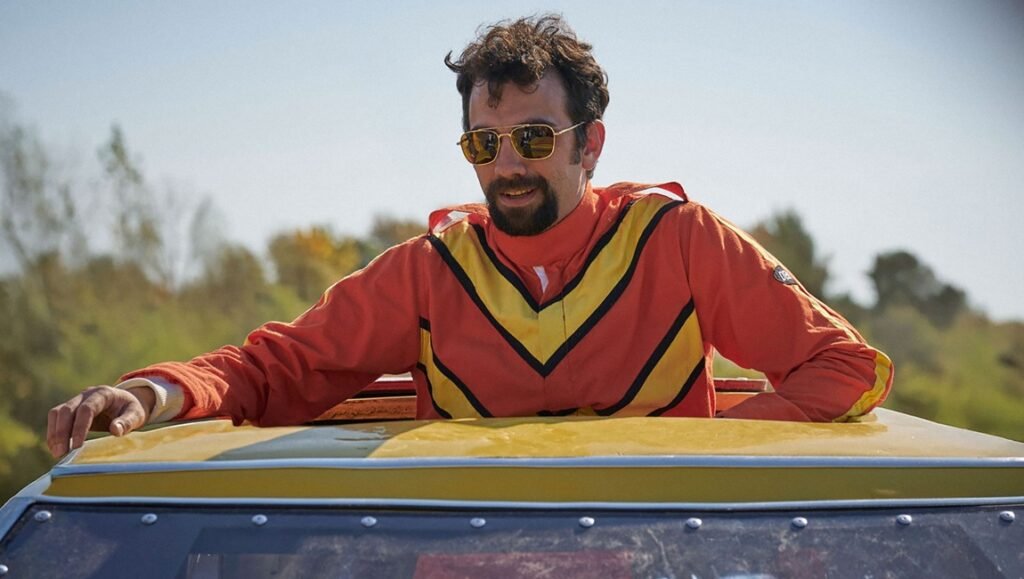
The Stunt Driver
Director Michael Dowse is no stranger to the rough-edged antihero, but perhaps he’s a bit less in touch with the management of thematic conciliation when beset by a character whose pride, masculinity, and vigor all must contend with a sympathetic gaze and the lives of those whisked into the storm that he not only creates, but maintains. The Stunt Driver is a biographical portrait of Montrealer Ken Carter, Canada’s most notorious stuntman, as he administers the build-up and fallout of a stunt even Evel Knievel had called both impossible and stupidly dangerous. Ken is played by famed Canadian Jay Baruchel, whose performance here feels akin to his stilted and overly affected embodiment of Mike Lazaridis in Blackberry, where any plausible emotional insight into the character — and this is certainly a failure of the screenplay, too — is lathered instead in a grunting rigidity, one without any semblance of vulnerability or fear. In fact, fear only extends into existence when the script demands it, with characters looking at, pointing to, and giving expression to the danger in front of their faces, as if to emphasize that now is the time to be thinking with a clearer head. Everything is as indexical as possible here, which becomes a bit confusing as we try to glean some essence or substance that the film is trying to offer as a reflection on its subject matter.
Shot between handheld 4:3 and classical wide anamorphic, The Stunt Driver ping-pongs between an “objective” view of these absurd circumstances, where Kent intends to jump the St. Lawrence River, and a verite reenactment of the footage that one can find in Robert Fortier’s The Devil at Your Heels, an NFB documentary produced alongside Kent’s momentum to commit himself to this extraordinary feat. This back-and-forth structuring, unfortunately, comes to offer very little perspective beyond the more pointed reflexivity extrapolated from Carter’s character here as a man all-in for the spectacle. Indeed, it is spectacle to which he bends the knee, marginalizing all else in his life: family, friends, peers, and even himself. Naturally, the cinema is a perfect space to consider such a dedication to the image of oneself as a spectral extension of one’s pride, and one’s capacity to become even bigger than one’s pride. Unfortunately, Dowse doesn’t have the intrigue or patience to hone in on these most fascinating of elements, instead defaulting to the most sentimental, milquetoast reflections on how these faculties of one’s character might ruin intimacy in one’s personal life. This writer has yet to see the Fortier profile on Carver, and so will instead direct all readers to John Bolton’s documentary about the circumstances surrounding the jump, 2016’s Aim for the Roses, a film that understands how to concern itself with the design of spectacle, and the way spectacle lives on, takes new forms, and reshapes itself across the years and decades in a way that separates the contemporary from its archive.
Where Dowse further missteps is in this Western need for storytellers to find a vague point of lamentation for their antiheroes. In this tendency, there is a failure to consider the impact these people had on those they hurt in their pursuit of exceptionalism, a failure to contend with the damage they caused in their escapades toward legacy, and a failure to deny the presumed importance of a protagonist who himself veered from the headlines of his own story, never reconciling the way spectacle operates as a function of the job and how it eats alive everyone who vies for an ascendancy toward its abstracting nature. The dramaturgy is rudimentary, often at odds with the tale of failure as depicted here, unsure how to compensate for the reality of anticlimax, and so instead Dowse manufactures one that carries with it none of the emotional weight the film very explicitly organizes through the second act. Over and over again, we are thudded by a hammer, a tool so committed to classical structuring wherein everything comes together tidily. But when the circumstances of this particular narrative fail to provide easy access to a legible beat sheet, Dowse reduces the complexity and tension at the heart of Carter’s failures and flattens them into digestible biography. Come the end, all we have is aimless contradiction upheld by mediocre craftsmanship. The Stunt Driver is a structural analog to the ramp Ken Carter had built for his impossible stunt, and once you see the film, if you do in fact end up seeing it, you’ll very immediately understand the metaphor. Or, you can just find a picture of it through a quick search engine inquiry and intuit most of what The Stunt Driver is after. — ZACHARY GOLDKIND
Also Playing
The Black Box is Orange
Toronto-based filmmaker Yuula Benivolski has made several impressive short films, the most recent of which, why I never became a driver, played several experimental film showcases. But those films could not prepare a viewer for the expansive vision Benivolski articulates in her feature debut, The Black Box is Orange. A multi-chapter film essay that explores the filmmaker’s personal and political experiences growing up in Israel, Black Box is uneven, giving the impression that Benivolski wanted to approach this difficult topic from as many angles as possible. It is an imperfect film that has moments of intellectual and artistic perfection, but sometimes gets lost in its own discursive pathways.
But this uncertainty is a fundamental element of Benivolski’s film. It frequently undercuts its own authority by asserting the very specific viewpoint of its maker, and this is crucial. As a Jewish person raised in Israel, Benivolski understands that while she has first-hand experience of Israel’s destruction of Palestinian communities, there are fundamental ways in which this is not entirely her story to tell. By asserting the limitations of her own identity, Benivolski assumes the tone of an expert witness to her own past, in particular her growing fear and rejection of the Zionist project.
This is the type of creative endeavor that must be organized in fragments, to avoid making grand statements on behalf of the often voiceless people of Palestine. Instead, Black Box begins with archival research and material history, as Benivolski tries to reckon with the unease she felt while living in the Israeli border town of Shlomi, which was the Palestinian village of al-Bassa prior to 1948. She describes running through the woods near her house and finding an inexplicable concrete slab in the middle of the trees. She discovers that this was a train platform, that a railway system once connected al-Bassa to Lebanon, and that although much has been done to erase that physical trace of Palestine, reminders still exist.
Much of the first part of Black Box focuses on Benivolski’s research, going through her old family photos as well as Israeli archives to collect evidence of al-Bassa’s existence. In the film’s strongest chapter, “The Little White House,” Benivolski identifies a single home on a high hill, one she remembers from her childhood and that keeps appearing in both family snapshots and official military images. In a place where the landscape is constantly being destroyed and rebuilt in order to erase any traces of Palestinian life, this structure remains like a silent witness. In its combination of personal memory and official records, “The Little White House” recalls the best work of Harun Farocki or Lawrence Abu Hamdan, or perhaps — even more specifically — the documentary work of Israeli filmmaker Amos Gitai.
“The Little White House” would be one of the year’s best films on its own, but Benivolski surrounds it with different kinds of discourse, with the viewer asked to consider how these registers of information bounce off one another. In one segment, Benivolski tells the story of a Palestinian family whose home is repeatedly raided. Handful by handful, the soldiers steal pictures from the family’s photo album, and Benivolski learns that the Israeli Ministry of Defense contains a massive archive of such stolen photos, classifying them according to their own internal categories. As we see a series of still images of Palestinians and Israelis going about their lives (which includes the frequent wearing of gas masks), Benivolski asks us to consider the dehumanization implicit in this disciplinary archive.
There are other chapters of Black Box whose overall purpose is less clear. One sequence shows images of the sea that have been distressed and scarred through hand processing, while another, labeled “Interlude,” fixates on the face of a one-year-old baby. That interlude recalls portions of Brakhage’s Dog Star Man, with its focus on the innocent, untutored gaze of the preverbal child, while the sea footage resembles any number of materially-oriented experimental films. The general scope and sprawl of Black Box allude to a particular history within the Canadian avant-garde, of expansive, variegated feature films in which coherence is not immediately evident — films like Jack Chambers’ The Hart of London, Joyce Wieland’s Reason Over Passion, and Michael Snow’s Rameau’s Nephew.
But this fragmentation serves a somewhat different purpose in Black Box. Benivolski seems to understand that it is not her place to make a grand, summative statement about the Nakba or the plight of the Palestinian people. What she can do, and what she does quite well, is articulate her own position as a former Israeli who has rejected Zionism and sees herself as an ally of the Palestinian cause. In one of the later chapters of the film, “being quiet,” Benivolski describes an assault she experienced at a friend’s house, and how young Israeli women are often subjected to sexual assault in dark underground bomb shelters. She treats her own experiences as further evidence of the toxic masculinity that inculcates Israeli men into violence. In a subsequent chapter, Benivolski describes growing up poor in Shlomi, and how Israel has used borderlands as slums in order to protect the more elite areas from direct attack.
This is very tricky territory. Benivolski makes comparisons between Zionist fascism and the broader abuse of women and the lower classes, and this could feel like special pleading — “we are victims too” — if the tone were off. But Black Box doesn’t try to equate these different forms of violence. Rather, the film places them side by side to suggest the path of Benivolski’s own political awakening. She felt these correspondences as elements of a more general sense of unease and unbelonging, a refusal to become the kind of docile subject that the culture demanded her to be. Black Box emphasizes that this is a material process, and just as much as Benivolski must look into the landscape to find the layers of history actively erased by Zionism, she must look inward as well, to discover what else has been actively erased. — MICHAEL SICINSKI
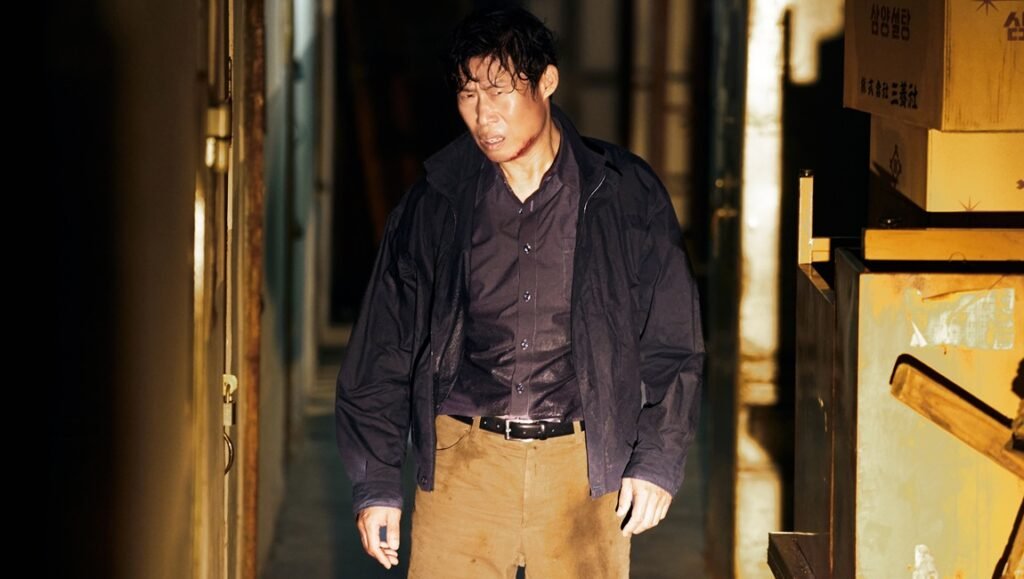
The Assassin(s)
In August 1974, during a speech commemorating the thirtieth anniversary of Korea’s liberation at the end of World War II, the first lady of Korea, Yuk Young-soo, was killed by an assassin. Also killed was a 17-year-old girl in the audience. The shooter was a Korean-Japanese man named Moon Se-kwang, who had managed to bypass security with a revolver and fired several shots at the stage while running toward it. He was quickly detained by security, and eventually tried, convicted, and executed. He claimed his target was Korean president Park Chung-hee, who had been the military dictator of South Korea for over a decade. The official story is that Moon was an agent of North Korea, but was otherwise acting alone. What Hur Jin-ho’s tense investigative drama The Assassin(s) suggests is that very little of that official account is true. Like most Americans, this writer knows very little about Korean history, and so this review is certainly no place to litigate the truth or falsehood of the various anomalies and conspiracies that The Assassin(s) proposes. What can be easily acknowledged is that the Hur’s latest is a thrilling throwback to an older style of film for grown-up liberals that Hollywood has seemingly forgotten how to make, one which joins a handful of other similar recent Korean films in asserting a kind of baseline consensus for a civil society.
An all-star cast populates two prongs of the investigation into the assassination. One is a group of journalists led by Park Hae-il (The Host, Ode to the Goose, Decision to Leave) who relentlessly point out inconsistencies in the official version of events, only to be beaten up by government thugs any time they publish something outside the party line. Their investigation uncovers various ties between Moon and Japanese and Korean corporations, as well as the potential identity of his handler. The other prong follows a cop (Yoo Hae-jin, from Exhuma and 1987: When the Day Comes) who had been part of the security detail and had in fact almost detained the assassin before he entered the theatre, but was stopped by the president’s security service and told to let the killer enter, even though he didn’t have a pass and was acting suspicious. His story reveals the various ways the investigation was botched and the local cops scapegoated for the security failure, as well as the impossibility of Moon’s having fired all of the shots, implicating the bodyguards in the killing of the teenager and possibly a second shooter in the killing of the First Lady.
The Assassin(s) necessarily relies on conventional character types to relate its dense story: the rookie reporter, the naive young cop and his pregnant wife, the drunken reporter who has seemingly given up but has a heart of gold, etc. (at one point, someone literally stops the presses). But the use of well-known, skilled performers functions to bring the stock figures to life, and Hur has a fine sense of dramatic timing, keeping all his various plots and intersecting characters clear and moving forward. The film never quite moves into the outlandish paranoia of an American conspiracy thriller like JFK — to say nothing of that film’s gloriously excessive style, which Hur eschews completely in favor of a robust normalism — staying instead on the All the President’s Men side of the “The Government is Lying to You About Everything” genre. The result is a convincing argument that a functional civil society needs both a free and independent media and a responsible police force. Given that these are two of the most debased professions of the 2020s, it’s fair to observe the film’s obvious timeliness.
The Assassin(s) comes from Hive Media, the same production company responsible for 12.12: The Day, the 2023 film about the aftermath of the (successful) assassination of Park Chung-hee in 1979. That film was a critical and box-office smash, even more so than 2017’s 1987: When the Day Comes (not Hive Media, but similar in style), a sprawling, multi-perspective film that followed (quite effectively) the protests that ultimately toppled South Korea’s military dictatorship. Taken as a trio with The Assassin(s), these films seem to reflect a civil society grappling with its own past and reasserting its values for the future. The trajectory from the triumphalism of 1987 to the unanswered questions of The Assassin(s) is a telling one: for all the victories we may have won, for all the values we supposedly share, the slide into authoritarian chaos is as present as ever and we must therefore remain ever-vigilant in our pursuit of truth — or at least our support of a free press. If this means that the tree of liberalism must, from time to time, be fertilized with the box office receipts of all-star period dramas, so be it. — SEAN GILMAN
Comments are closed.