
“Medical assistance in dying,” or MAID in Canada, is the country’s assisted suicide legal framework. The framework is now a decade old, and its use has been relatively normalized. (This writer, for instance, knew someone who chose to die this way, and this is not in itself an unusual level of awareness across the country.) For director Sophie Deraspe, coming off back-to-back narrative features that took TIFF’s Best Canadian Film prize, the subject has perhaps been on her mind since as far back as 2009’s Vital Signs, in which a character joins the staff of a palliative care department. By all accounts, she is a director with an unusual level of research-based insight and prestige to lend the topic.
Yet The Final Act most assuredly does not follow in the tradition of sensitively rendered reflections of mortality in nonfiction cinema, as in Frederick Wiseman’s Near Death, Michael Roemer’s Dying, or Allan King’s Dying at Grace. Unlike those films, we do not gain deeply intimate access to particular people. Instead, Deraspe adopts an oral history approach, in which a cross-section of people all variously echo similar ideas underpinning their reasons for choosing MAID, and their intentions in choosing to have their final days filmed. But while Deraspe is evidently a natural interviewer, what becomes immediately clear is that her film is sloppily constructed, ignores the tension inherent in the topic, and, at the risk of harshly criticizing a film that contains many moments of vulnerable confession, rather dubious in its conclusions.
After opening with a Camus quote and letting social psychologist Sheldon Solomon set up the film’s philosophical premise — that MAID represents a new paradigm of living and dying that has never before existed in human history — the film assumes an almost faux-naive approach, with choirboys that stare into the camera lens and a range of interview segments that studiously avoid the most critical aspects of MAID policy that are currently in the process of being enacted, debated, and delayed in Canada. This is a film about assisted suicide that never once uses the word disability (though visible disability does appear), and completely elides discussion of mental illness.
The social impact of MAID has already, in highly publicized cases, become a pressurized aspect of living with disability in Canada; a common criticism of the framework is that assisted suicide is such an efficient process that it all but eliminates the tricky, nuanced, near-impossible conversations that provide the basis of Wiseman’s film about what it means to suffer or die or prolong life when pain is by its nature self-reported. Instead of this protracted refinement of language and treatment, MAID might be said to displace pressure from the public healthcare system onto its most vulnerable members. The expansion of MAID in Canada to include people who, rather than having a “reasonably foreseeable” death, are simply diagnosed with a mental illness that has no permanent cure, is currently delayed from 2023 until at least 2027 because of how this legal intervention could impact human rights.
While none of these controversies — or, one might say, questions inherent to the topic — are raised in the film, this context reveals the limitation of Deraspe’s human-interest approach. MAID is essentially a means by which one’s rights are potentially empowered regarding one’s own suffering. This is the way most of the subjects articulate their decision. They do not want to suffer, and they do not want their loved ones to suffer by witnessing the deterioration of their body and mind. There is something tragically inadequate about this line of thinking, however. As we hear its repetition, there is no question that this mantra is the truth of their experience, but this fear of fear is implicitly contradicted in the brief moments when we see that their deaths, of course, in no way prevent long-term grief and trauma for each patient’s surviving family members and friends. People exercise their autonomy, but any supposed radical change — and the reach of its meaning — can never be truly named or investigated. It’s a new legal process, a new variation on a ritual. So what does it mean for MAID to create justifiable scenarios that, even in a best-case use, produce unintended effects? This is the ultimate limitation of the reportage mode of streeters and oral histories; if Deraspe has anything to say about what her in-the-field empathy has collated, we never hear it, as she prefers to keep her film in a sentimentalized and easily digestible frame.
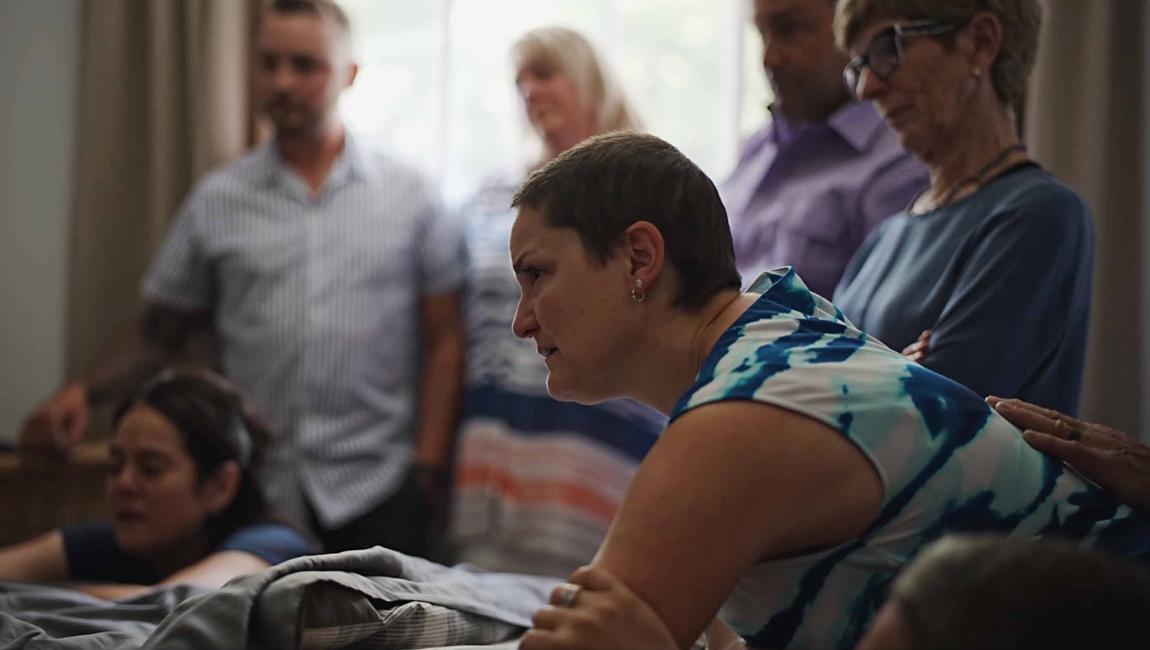
In effect, then, The Final Act is an advertisement for what might be termed “standard use” under the MAID framework. Each person dies at home or in a care facility surrounded by loved ones. It happens that all of Deraspe’s main subjects have extended families and friend networks, which lend their final moments, cross-cut near the end of the film in a way that is perhaps egregious, a sense of spectacle. 15 years ago, a movie called How to Die in Oregon won the Sundance jury prize for best documentary. It was an unabashed advocacy doc (with its own share of flaws) at a time when legislation around the right to assisted suicide was rare in North America. To make this kind of film now in Canada is timely, and also slightly absurd in its slant. One of the repeated conclusions in The Final Act is that there should be no shame, and less reluctance, and far more familiarity, when it comes to talking about death. But the film cannot conceive of an actual public that might do this talking; it contains itself to the suspect banality of a few well-cast model cases.
Published as part of TIFF 2026 — Dispatch 5.
Comments are closed.