
One of the better moments in Park Joon-ho’s debut feature, 3670, is its first. The young, timid Cheol-jun (Cho Yoo-hyun) climaxes during a sexual encounter with a man whom he has just met, afterward failing to sweet-talk him into having dinner. Par for the course, the scene itself is one of the oldest tales of the coming-of-age film. 3670, like a lot of debut features before it, is so chock-full of platitudes that it could be two films in one, or hundreds.
Admittedly, 3670’s premise is hyper-intriguing. It is also arcane, yet universal, following Cheol-jun, a gay North Korean defector who must reconcile his personal relationships and sexuality amidst the gay scene of his newfound South Korea. For a narrative that seems to promise something original — if not a part of a genre construct — Park ends up falling into the usual first-time director traps that have existed for a century. The film’s first scene, despite its perfunctory and vapid fabrication, is composed of deliberately muddy compositions that create a wonderful blurring of bodies and forms. It acts as an oddly refreshing opening, especially given that the remainder of the film so obviously favors the most placid shapes possible in what should undoubtedly be more expressive.
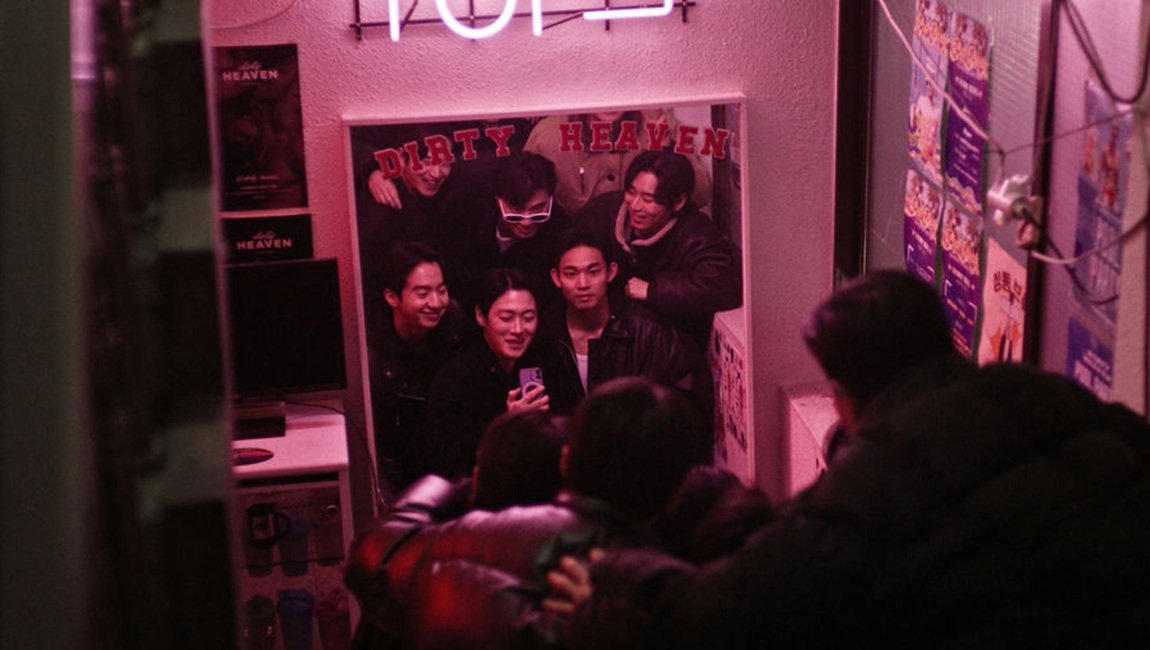
We soon learn that Cheol-jun is a student, closeted from his fellow defector peers as he prepares for college and works an unfulfilling job at a grocery store. The film chugs along slowly until Cheol-jun attends a gay mixer and begins a friendship with Yeong-jun (Kim Hyun-mok), a member of an intimate group of friends that regularly meet for drinks — a group Cheol-jun subsequently joins. 3670’s own namesake — an interesting title in its own right — derives from this group, the four numbers functioning as a group chat code for potential meet-ups.
From this very moment of narrative propulsion, Park commits to the same mimetic brand of cinema that haunts the multiplexes of today. Anything that can be seen in the commercial pantheon of the coming-of-age film — most notably, something like Lady Bird — can be seen here: the friendship deepens, the protagonist comes out of their shell, a betrayal occurs, a forgiveness is given. Forget the coming-of-age story altogether and look instead to a different, far more insipid genre; one that seems more committed to the clunky, wooden act of crossing each t and dotting each i than allowing a character or a line to breathe despite the shackles of filmic structure. Forget the muted evocation of a Rohmer or Ozu character and look no further than song and dance being used as an allegory for an emotional arc (the film ends with Cheol-jun conquering his fear of live karaoke). All of that to say, it’s a wonder that the modern festival film — arriving in a place where original, independent stories are championed — could be so artistically redundant.
Most of the merits that present themselves in 3670 can be attributed to Cho Yoo-hyun, whose central performance bears resemblance to the sort of film this should be. It’s the kind of enigmatic performance that aptly toes the line between young and old polarities, and often allows one to empathize with Cheol-jun, even when the film fails to provide the means to do so. Yoo-hyun in 3670, in that sense, is not unlike Marie Rivière in Rohmer’s The Green Ray, a fully-fledged adult who often cowers in adolescent fear at social discomfort. Rohmer, however, as mentioned, understood in The Green Ray what Joon-ho could not in 3670, which is the wondrousness of the austere, unflinching resolution in place of the polemical, heavy-handed one.
Call the comparison what you will, but it is nonetheless noteworthy to draw distinctions between the film that is and the film that could be; or, more suitably, the films that are and the films that could be. 3670 poses the questions: What have we left to gain from the coming-of-age story? What, if anything, is lost in transposing its framework to a different set of circumstances each time and with varying results? Why, for a film so singular — both in its premise and milieu — do such broad questions arise? Perhaps it is because the contemporary genre film has become more rigid than ever before. Perhaps we want something different, something fresh. We want to rid ourselves of expectancy, of seeing each step before it appears. We want a film to be unwavering, innovative, dialectical, evocative, intellectually stimulating. Ultimately, the largest misstep of 3670 is its inability to become something wholly its own, to be free from the confines of its supposed category. Where it should be contemplative, it is overly literal. Where it should astound, it is banal. 3670’s new identity, then, is that of an overcorrecting driver: the more it yanks in the direction of tradition, the harder it veers off course.
Published as part of NYAFF 2026 — Dispatch 1.
Comments are closed.