
In August 1974, during a speech commemorating the thirtieth anniversary of Korea’s liberation at the end of World War II, the first lady of Korea, Yuk Young-soo, was killed by an assassin. Also killed was a 17-year-old girl in the audience. The shooter was a Korean-Japanese man named Moon Se-kwang, who had managed to bypass security with a revolver and fired several shots at the stage while running toward it. He was quickly detained by security, and eventually tried, convicted, and executed. He claimed his target was Korean president Park Chung-hee, who had been the military dictator of South Korea for over a decade. The official story is that Moon was an agent of North Korea, but was otherwise acting alone. What Hur Jin-ho’s tense investigative drama The Assassin(s) suggests is that very little of that official account is true. Like most Americans, this writer knows very little about Korean history, and so this review is certainly no place to litigate the truth or falsehood of the various anomalies and conspiracies that The Assassin(s) proposes. What can be easily acknowledged is that the Hur’s latest is a thrilling throwback to an older style of film for grown-up liberals that Hollywood has seemingly forgotten how to make, one which joins a handful of other similar recent Korean films in asserting a kind of baseline consensus for a civil society.
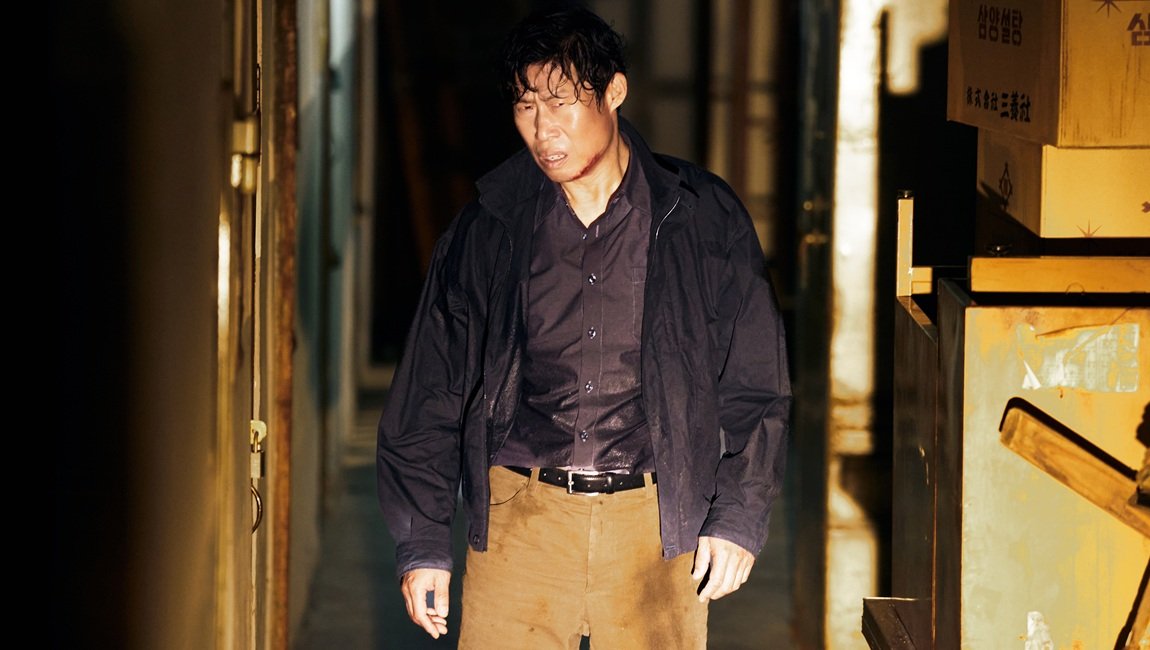
An all-star cast populates two prongs of the investigation into the assassination. One is a group of journalists led by Park Hae-il (The Host, Ode to the Goose, Decision to Leave) who relentlessly point out inconsistencies in the official version of events, only to be beaten up by government thugs any time they publish something outside the party line. Their investigation uncovers various ties between Moon and Japanese and Korean corporations, as well as the potential identity of his handler. The other prong follows a cop (Yoo Hae-jin, from Exhuma and 1987: When the Day Comes) who had been part of the security detail and had in fact almost detained the assassin before he entered the theatre, but was stopped by the president’s security service and told to let the killer enter, even though he didn’t have a pass and was acting suspicious. His story reveals the various ways the investigation was botched and the local cops scapegoated for the security failure, as well as the impossibility of Moon’s having fired all of the shots, implicating the bodyguards in the killing of the teenager and possibly a second shooter in the killing of the First Lady.
The Assassin(s) necessarily relies on conventional character types to relate its dense story: the rookie reporter, the naive young cop and his pregnant wife, the drunken reporter who has seemingly given up but has a heart of gold, etc. (at one point, someone literally stops the presses). But the use of well-known, skilled performers functions to bring the stock figures to life, and Hur has a fine sense of dramatic timing, keeping all his various plots and intersecting characters clear and moving forward. The film never quite moves into the outlandish paranoia of an American conspiracy thriller like JFK — to say nothing of that film’s gloriously excessive style, which Hur eschews completely in favor of a robust normalism — staying instead on the All the President’s Men side of the “The Government is Lying to You About Everything” genre. The result is a convincing argument that a functional civil society needs both a free and independent media and a responsible police force. Given that these are two of the most debased professions of the 2020s, it’s fair to observe the film’s obvious timeliness.
The Assassin(s) comes from Hive Media, the same production company responsible for 12.12: The Day, the 2023 film about the aftermath of the (successful) assassination of Park Chung-hee in 1979. That film was a critical and box-office smash, even more so than 2017’s 1987: When the Day Comes (not Hive Media, but similar in style), a sprawling, multi-perspective film that followed (quite effectively) the protests that ultimately toppled South Korea’s military dictatorship. Taken as a trio with The Assassin(s), these films seem to reflect a civil society grappling with its own past and reasserting its values for the future. The trajectory from the triumphalism of 1987 to the unanswered questions of The Assassin(s) is a telling one: for all the victories we may have won, for all the values we supposedly share, the slide into authoritarian chaos is as present as ever and we must therefore remain ever-vigilant in our pursuit of truth — or at least our support of a free press. If this means that the tree of liberalism must, from time to time, be fertilized with the box office receipts of all-star period dramas, so be it.
Comments are closed.